Most vendors work alone. No helper, no booth buddy, no backup. You are the salesperson, the cashier, the security, and the display builder all in one body. That is a lot to ask of one person over a 10-hour day.
A self-serve table setup is how solo vendors survive and actually THRIVE at shows. Here is how to build one.
Price Everything Visibly
The number one time drain for solo vendors is answering the question "how much is this?" Multiply that by 300 people over two days and you have spent hours doing something a label could handle.
Price tags on every item. Category signs for grouped pricing. Big, readable fonts. No one should need to ask. This one change frees up more of your time than any other.
Build Vertical So People Can Browse Without You
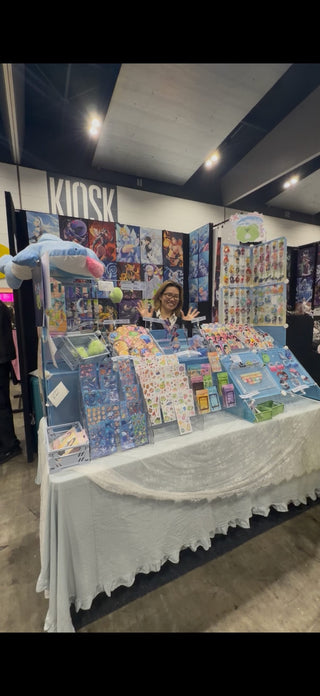
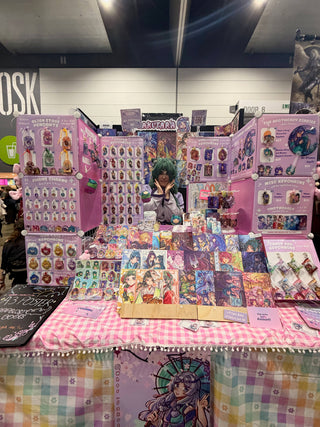
A flat table forces customers to lean over your space, get in each other's way, and rely on you to point things out. Vertical displays let multiple people browse independently at the same time.
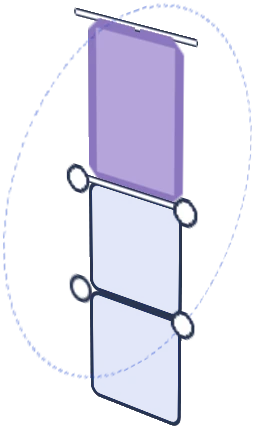
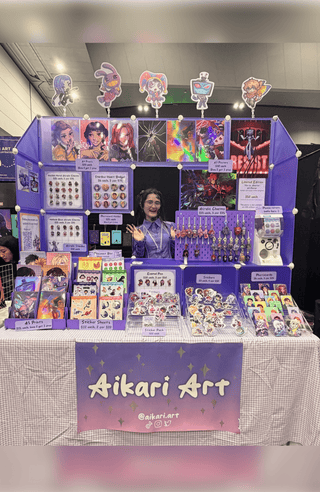
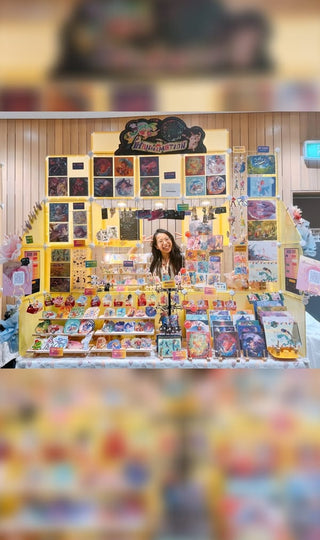
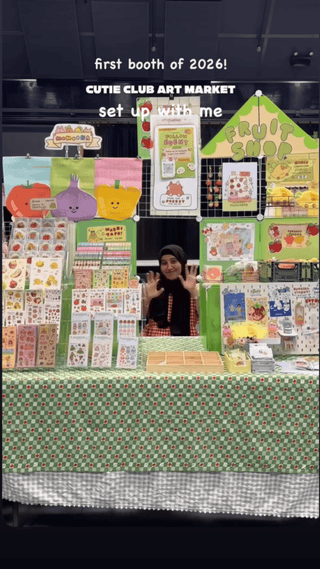
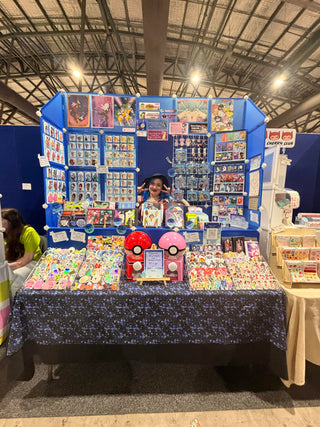
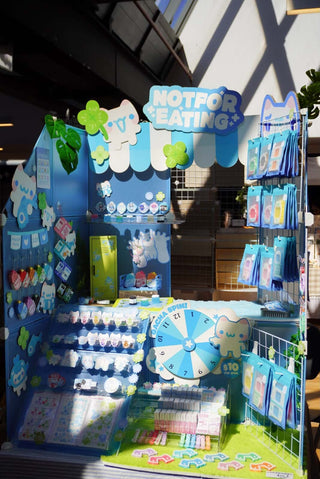
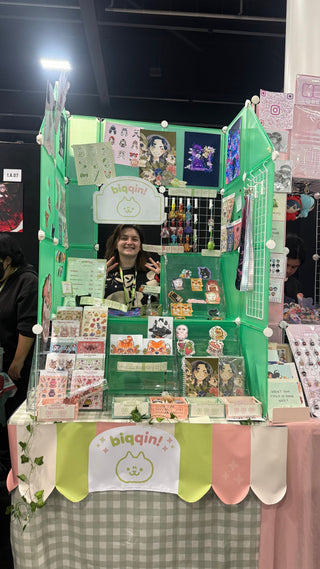
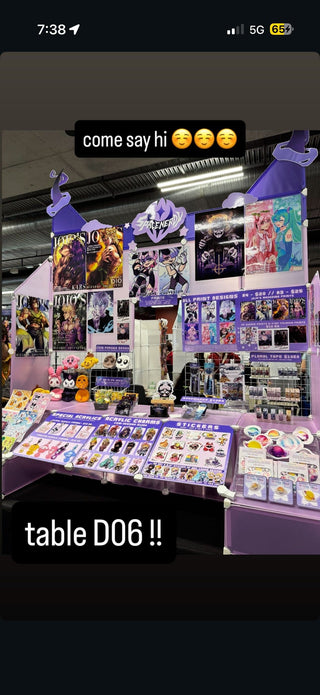
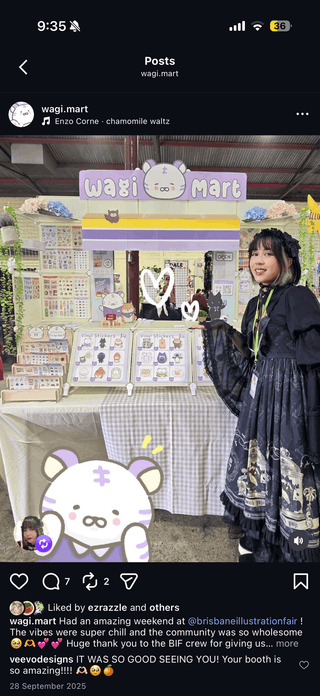
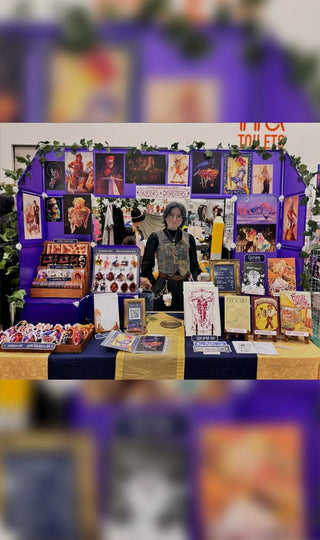
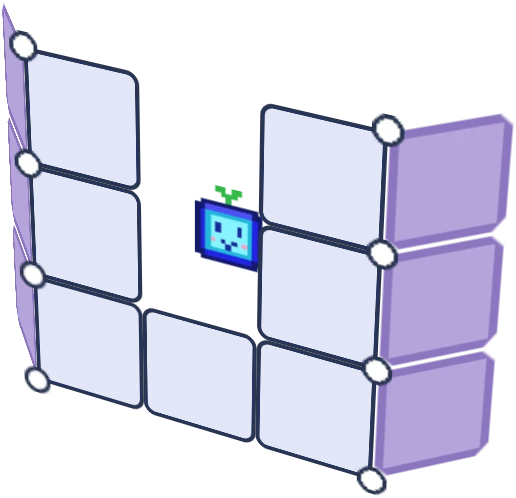
A modular display kit builds five panels high, giving you 175cm of browsable space. Customers can see your full range from the aisle. They self-select what interests them before they even reach the table. That is a massive efficiency gain for a solo operation.
Create a Clear Checkout Zone
Designate one corner of your table as the pay station. Card reader, bags, business cards. When customers are done browsing, they know exactly where to go. This prevents the awkward hovering that happens when people are ready to buy but cannot figure out where to pay.
Keep it TIGHT. A small stand with your card reader, a stack of bags, and a dish for cash. Nothing more.
Use Your Layout to Answer Questions
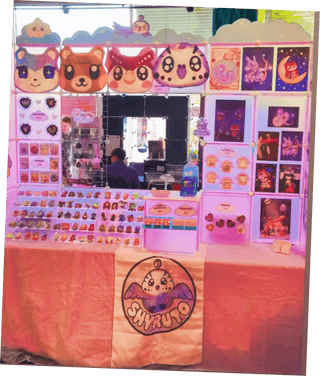
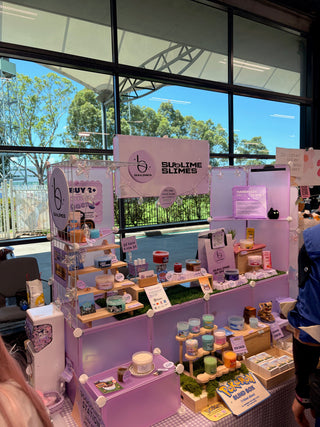
Group products by type or price point. Put your bestsellers at eye level. Place new items where they catch attention naturally. Signage that says "all prints $15" or "original paintings" eliminates questions before they happen.
Think of your display as a silent employee. Every sign, every grouping, every price tag is that employee doing work so you do not have to.
Prepare for Breaks
You will need to step away. Bathroom, food, five minutes of quiet. A self-serve setup means your table keeps functioning. Customers can browse, check prices, and even leave payment (card readers with tap-to-pay work while you are a few steps away).
Some vendors put a small sign: "back in 5, feel free to browse." It works. People respect it.
Can I really run a booth completely alone?
Yes. Thousands of vendors do it every weekend. The key is a setup that does not depend on you being present for every interaction. Self-serve layout, clear pricing, and a simple checkout flow make it very manageable.
What size display works best for a solo vendor?
A Shapeshift or Shapeshift Angled (46 panels each) hits the sweet spot. Enough to build a strong vertical display that sells for you, small enough to set up alone in under 30 minutes. Check the full kit range to compare sizes.
How do I handle theft when I am alone?
Keep high-value items closer to you or behind the table. Use your vertical display to create a natural barrier. Most theft at conventions is opportunistic, so visibility is your best deterrent. A well-lit, well-organised table with clear sightlines discourages it.
![Artistbooths Bundle Component Frosted Lavender Purple (PMS 2715 C) Panel Square (35x35 cm) [8-pack]](http://artistbooths.com/cdn/shop/files/artistbooths-bundle-component-frosted-lavender-purple-pms-2715-c-boof-panel-square-35x35-cm-8-pack-1214015634.png?v=1767318728&width=300)


![Artistbooths Bundle Component Frosted Lilac Purple (PMS 263 C) BOOF Panel Triangle (35x35 cm) [2-pack]](http://artistbooths.com/cdn/shop/files/artistbooths-bundle-component-frosted-lilac-purple-pms-263-c-boof-panel-triangle-35x35-cm-2-pack-1214015625.png?v=1767318428&width=300)















![Square Panel [24 Pack] (35cm / 13.8in) Add-on](http://artistbooths.com/cdn/shop/files/Bulk_thumbnails-14.png?v=1782275611&width=320)
![Self Serve Hook with wire grid T clip 8cm [10 pack] Add-on](http://artistbooths.com/cdn/shop/files/artistbooths-booth-garage-t-section-self-serve-grid-hook-8cm-10pcs-1234044856.png?v=1776916212&width=320)
![Self serve display Grid & Intersection Hook expansion pack [12/24 Mixed pack] Add-on](http://artistbooths.com/cdn/shop/files/artistbooths-booth-garage-12-pack-2-grid-10-hooks-self-serve-display-grid-intersection-hook-expansion-pack-12-24-mixed-pcs-1234209872.png?v=1777005938&width=320)
![Multi Connector Expansion Pack - White - Bundle & Save [16/32 mixed pack] Add-on](http://artistbooths.com/cdn/shop/files/artistbooths-booth-garage-16-mixed-connector-pro-pack-connector-pro-expansion-pack-white-bundle-save-16-32-mixed-pcs-1234209875.png?v=1777005971&width=320)

![Mini Rectangle Panels [5-Pack] (17cm x 35cm/6.69in x 13.78in) Add-on](http://artistbooths.com/cdn/shop/files/artistbooths-booth-garage-frosted-amber-yellow-pms-1235-c-half-squares-10-pack-17cm-6-69in-1229850280.png?v=1774848457&width=320)
![Foot Connector Expansion Pack [4 Pcs] Add-on](http://artistbooths.com/cdn/shop/files/artistbooths-booth-garage-white-foot-connector-4-pcs-1233353183.png?v=1776908318&width=320)
![Mixed Single & Double Wire Shelf Clip [9 pack] Add-on](http://artistbooths.com/cdn/shop/files/mixed-single-double-wire-shelf-clip-9-pack_0c6e301c-8a76-411c-962a-8bf135de46c4.png?v=1792031372&width=320)
![Booth Wheel & Wheel Connector - white - [4 pack] Add-on](http://artistbooths.com/cdn/shop/files/artistbooths-booth-garage-booth-wheel-4pcs-wheel-connector-4-pcs-white-1234044880.png?v=1776916093&width=320)
![Corner Connector Expansion Pack [8 pack] Add-on](http://artistbooths.com/cdn/shop/files/artistbooths-booth-garage-white-corner-connector-expansion-pack-4-pcs-1234044868.png?v=1776915937&width=320)
![Edge Connector [8 pack] Add-on](http://artistbooths.com/cdn/shop/files/artistbooths-booth-garage-white-edge-connector-4-pcs-1234044876.png?v=1776915671&width=320)
![Single Shelf Wire Clip White [5 pack] Add-on](http://artistbooths.com/cdn/shop/files/artistbooths-booth-garage-single-shelf-wire-clip-white-5pcs-1234044883.png?v=1776915612&width=320)
![Double shelf wire clip white [4 pack] Add-on](http://artistbooths.com/cdn/shop/files/artistbooths-booth-garage-white-double-shelf-wire-clip-4-pack-1233353188.png?v=1776771613&width=320)
![Self serve display Grid & Fold Hook expansion pack [12/24 Mixed pack] Add-on](http://artistbooths.com/cdn/shop/files/artistbooths-booth-garage-12-pack-2-grid-10-fold-hooks-self-serve-display-grid-fold-hook-expansion-pack-12-24-mixed-pcs-1234209869.png?v=1777005852&width=320)
![Foldable Self Serve Hook (with wire clip) - [20 pack] Add-on](http://artistbooths.com/cdn/shop/files/artistbooths-booth-garage-white-foldable-self-serve-hook-wire-clip-version-10-pcs-1234214602.png?v=1777016318&width=320)
![Foldable Self Serve Hooks (with adhesive sheet) [20 pack] Add-on](http://artistbooths.com/cdn/shop/files/artistbooths-booth-garage-white-foldable-self-serve-hooks-adhesive-version-10-pcs-1234214609.png?v=1777016200&width=320)
![Metal mallet (with dual rubber/soft tap sides) [1 pc] Add-on](http://artistbooths.com/cdn/shop/files/artistbooths-bundle-component-dual-headed-metal-mallet-with-soft-tap-side-1209303104.png?v=1764380999&width=320)
![Panel Clamp Black 3cm Mouth [4 pcs] Add-on](http://artistbooths.com/cdn/shop/files/artistbooths-booth-garage-panel-clamp-2-pcs-1233843253.png?v=1776843493&width=320)