Nobody hands you a manual for sharing a table. You just show up, meet a stranger, and negotiate six feet of real estate in real time while attendees are already walking the aisle. Do it wrong and you spend the weekend annoyed at each other. Do it right and you both sell better.
Respect the middle, own your edges
The center of a shared table is neutral ground. Don't colonize it with your signage the second you finish setup. Build your tallest, boldest pieces toward your own outer edge and let the middle stay lower and shared. This alone prevents 90 percent of shared-table friction.
Ask before you go tall
Going vertical is the best move on a small footprint, but it can block your neighbor's booth if you don't communicate first. A quick request like asking if it's okay to build up on your side takes ten seconds and saves an awkward teardown later. Most artists are relieved someone actually asked.
Standing out doesn't mean taking over
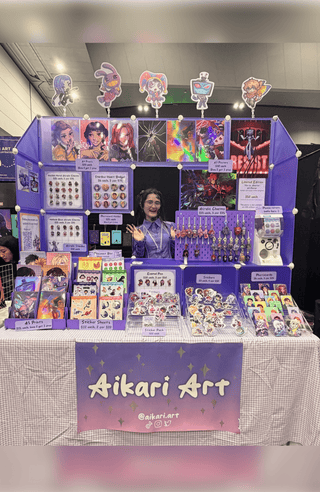
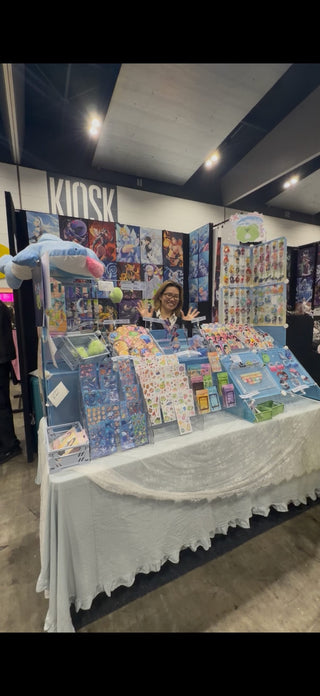
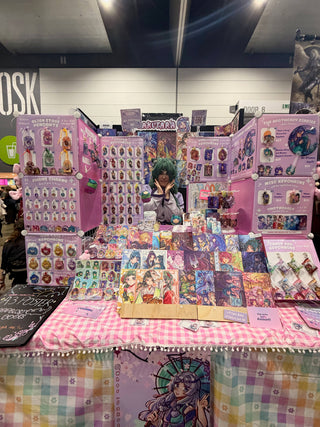
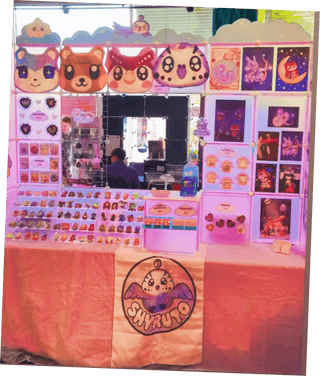
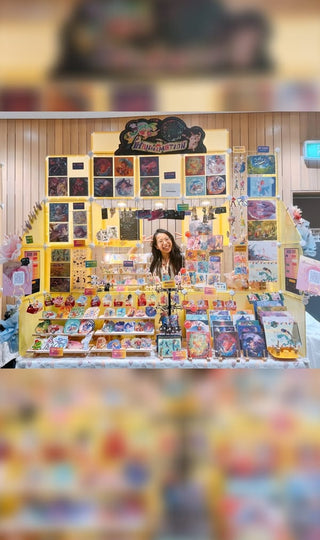
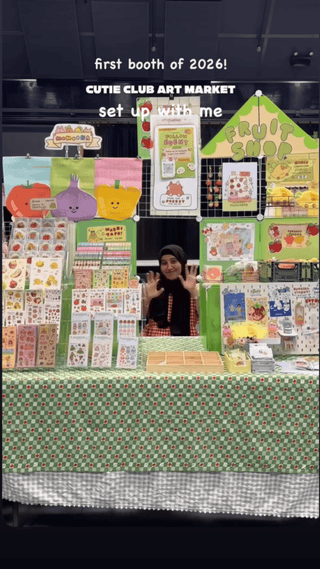
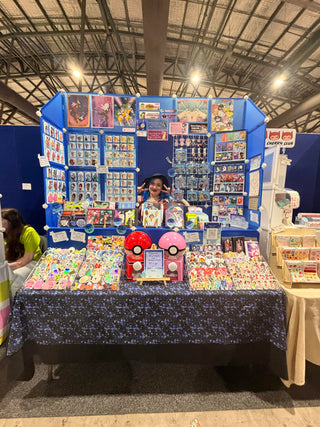
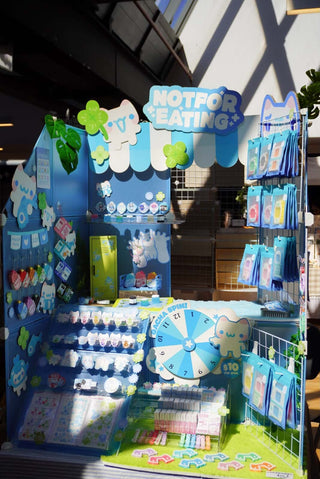
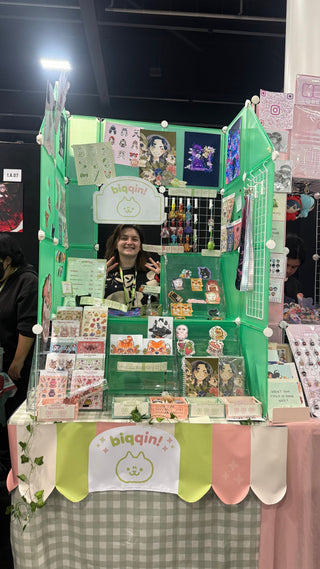
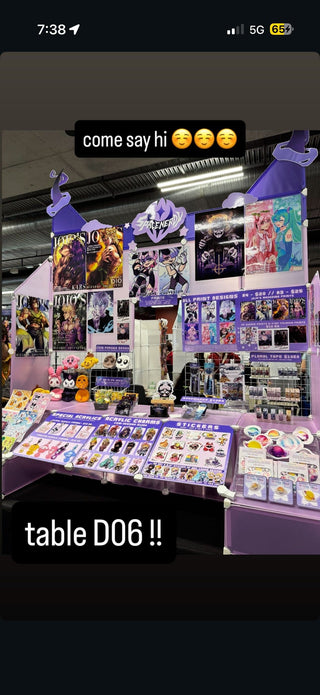
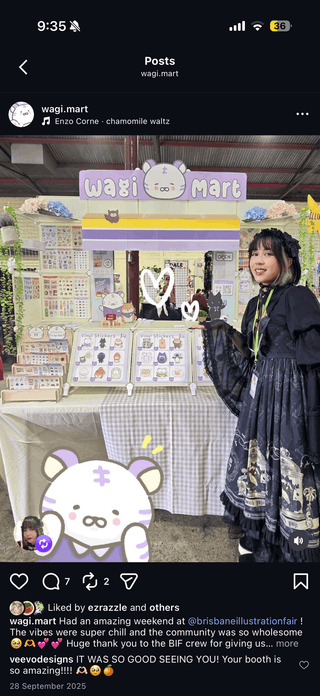
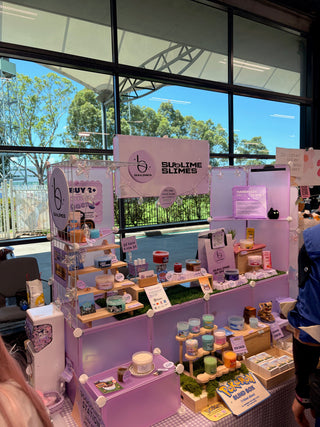
You can have the more eye catching table without stepping on your neighbor. This is where a proper display system earns its keep. A grid of panels in a colour that matches your brand, holding your best pieces at eye level, reads more professional than a pile of prints no matter how good the art is. You don't need more space to look better. You need better structure in the space you've got.
Keep your footprint on your own side
Bins, totes, and backstock stay strictly under your own half of the table. Nothing sours a shared table relationship faster than someone's overflow creeping into the other person's leg room by hour three of day one.
Setup speed is a courtesy, not just convenience
When you're sharing a table, you're often sharing a setup window too. A kit that assembles in under 30 minutes with no tools means your tablemate isn't standing around waiting on you to finish before they can start. Panels pack flat into a 56x36x23cm carry-on, so you're not spreading gear across the aisle while you dig through a bag for a wrench you forgot anyway.
Who decides how the shared table gets split?
Usually whoever arrives first proposes a split down the middle, then both artists adjust from there. Measure evenly and stick to it once you've agreed.
What if my tablemate's setup is way bigger than mine?
Bring it up early, not on day two. A calm conversation about rebalancing is normal and most artists would rather fix it than stew about it all weekend.
Can a display kit actually help avoid conflict?
Yes. Defined panel edges act as a visual boundary line, which removes a lot of the ambiguity that causes shared table disputes in the first place.
Good etiquette and a strong table aren't in conflict. Start with our modular display kit or browse the full kit lineup to build a setup that plays well with others and still stands out.
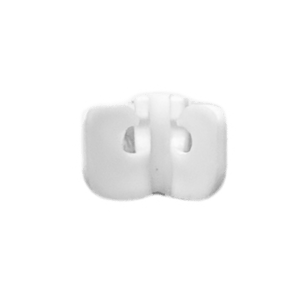
![Artistbooths Bundle Component Frosted Lavender Purple (PMS 2715 C) Panel Square (35x35 cm) [8-pack]](http://artistbooths.com/cdn/shop/files/artistbooths-bundle-component-frosted-lavender-purple-pms-2715-c-boof-panel-square-35x35-cm-8-pack-1214015634.png?v=1767318728&width=300)


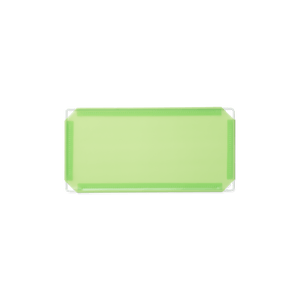
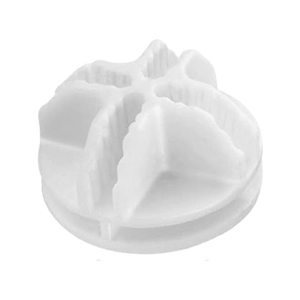
![Artistbooths Bundle Component Frosted Lilac Purple (PMS 263 C) BOOF Panel Triangle (35x35 cm) [2-pack]](http://artistbooths.com/cdn/shop/files/artistbooths-bundle-component-frosted-lilac-purple-pms-263-c-boof-panel-triangle-35x35-cm-2-pack-1214015625.png?v=1767318428&width=300)
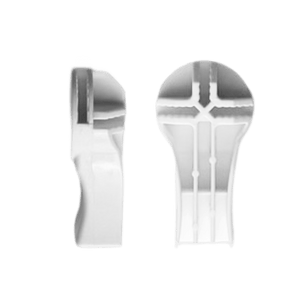


![Artistbooths Bundle Component Frosted Lilac Purple (PMS 263 C) BOOF Panel Half Square (35x17.5 cm) [4-pack]](http://artistbooths.com/cdn/shop/files/artistbooths-bundle-component-frosted-lilac-purple-pms-263-c-boof-panel-half-square-35x17-5-cm-4-pack-1214015628.png?v=1767318516&width=300)
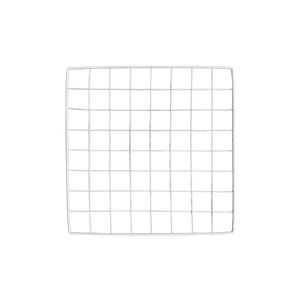












![Square Panel [24 Pack] (35cm / 13.8in) Add-on](http://artistbooths.com/cdn/shop/files/Bulk_thumbnails-14.png?v=1782275611&width=320)
![Self Serve Hook with wire grid T clip 8cm [10 pack] Add-on](http://artistbooths.com/cdn/shop/files/artistbooths-booth-garage-t-section-self-serve-grid-hook-8cm-10pcs-1234044856.png?v=1776916212&width=320)
![Self serve display Grid & Intersection Hook expansion pack [12/24 Mixed pack] Add-on](http://artistbooths.com/cdn/shop/files/artistbooths-booth-garage-12-pack-2-grid-10-hooks-self-serve-display-grid-intersection-hook-expansion-pack-12-24-mixed-pcs-1234209872.png?v=1777005938&width=320)
![Multi Connector Expansion Pack - White - Bundle & Save [16/32 mixed pack] Add-on](http://artistbooths.com/cdn/shop/files/artistbooths-booth-garage-16-mixed-connector-pro-pack-connector-pro-expansion-pack-white-bundle-save-16-32-mixed-pcs-1234209875.png?v=1777005971&width=320)

![Mini Rectangle Panels [5-Pack] (17cm x 35cm/6.69in x 13.78in) Add-on](http://artistbooths.com/cdn/shop/files/artistbooths-booth-garage-frosted-amber-yellow-pms-1235-c-half-squares-10-pack-17cm-6-69in-1229850280.png?v=1774848457&width=320)
![Foot Connector Expansion Pack [4 Pcs] Add-on](http://artistbooths.com/cdn/shop/files/artistbooths-booth-garage-white-foot-connector-4-pcs-1233353183.png?v=1776908318&width=320)
![Mixed Single & Double Wire Shelf Clip [9 pack] Add-on](http://artistbooths.com/cdn/shop/files/artistbooths-booth-garage-12-pack-2-grid-10-fold-hooks-self-serve-display-grid-fold-hook-expansion-pack-12-24-mixed-pcs-1234209869.png?v=1777005852&width=320)
![Booth Wheel & Wheel Connector - white - [4 pack] Add-on](http://artistbooths.com/cdn/shop/files/artistbooths-booth-garage-booth-wheel-4pcs-wheel-connector-4-pcs-white-1234044880.png?v=1776916093&width=320)
![Corner Connector Expansion Pack [8 pack] Add-on](http://artistbooths.com/cdn/shop/files/artistbooths-booth-garage-white-corner-connector-expansion-pack-4-pcs-1234044868.png?v=1776915937&width=320)
![Edge Connector [8 pack] Add-on](http://artistbooths.com/cdn/shop/files/artistbooths-booth-garage-white-edge-connector-4-pcs-1234044876.png?v=1776915671&width=320)
![Single Shelf Wire Clip White [5 pack] Add-on](http://artistbooths.com/cdn/shop/files/artistbooths-booth-garage-single-shelf-wire-clip-white-5pcs-1234044883.png?v=1776915612&width=320)
![Double shelf wire clip white [4 pack] Add-on](http://artistbooths.com/cdn/shop/files/artistbooths-booth-garage-white-double-shelf-wire-clip-4-pack-1233353188.png?v=1776771613&width=320)
![Foldable Self Serve Hook (with wire clip) - [20 pack] Add-on](http://artistbooths.com/cdn/shop/files/artistbooths-booth-garage-white-foldable-self-serve-hook-wire-clip-version-10-pcs-1234214602.png?v=1777016318&width=320)
![Foldable Self Serve Hooks (with adhesive sheet) [20 pack] Add-on](http://artistbooths.com/cdn/shop/files/artistbooths-booth-garage-white-foldable-self-serve-hooks-adhesive-version-10-pcs-1234214609.png?v=1777016200&width=320)
![Metal mallet (with dual rubber/soft tap sides) [1 pc] Add-on](http://artistbooths.com/cdn/shop/files/artistbooths-bundle-component-dual-headed-metal-mallet-with-soft-tap-side-1209303104.png?v=1764380999&width=320)
![Panel Clamp Black 3cm Mouth [4 pcs] Add-on](http://artistbooths.com/cdn/shop/files/artistbooths-booth-garage-panel-clamp-2-pcs-1233843253.png?v=1776843493&width=320)