The first time you table at artist alley, it feels like a party. You printed 200 stickers, bought a tablecloth, and spent the morning arranging everything perfectly. You sold $180 and it felt like a million dollars.
Then you did it again. And again. And somewhere around show number ten, a quiet thought crept in: is this a business or a very EXPENSIVE hobby?
The Numbers Nobody Posts About
Every artist alley thread online talks about the creative side. The new prints, the display inspiration, the haul photos. Almost nobody posts their profit margins.
Here is what the math actually looks like for a typical artist alley vendor. Table fee: $80 to $300. Printing costs: $50 to $200 depending on your product mix. Travel and parking: $20 to $100. Food: $15 to $30 because you will eat, even if you packed snacks. Total cost to show up: $165 to $630 before you sell a single thing.
To break even at most shows, you need to sell $200 to $400 in product. That is doable for an established vendor with a strong product line and decent foot traffic. It is a stretch for someone still figuring out what sells.
The Display Factor
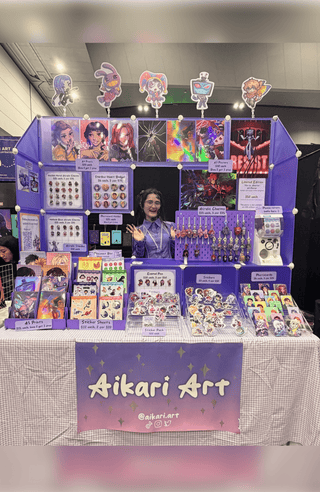
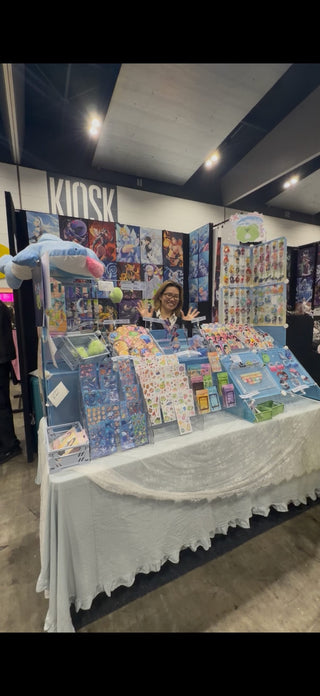
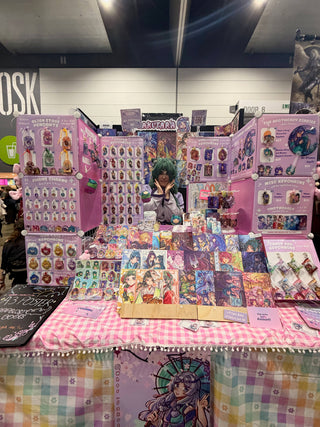
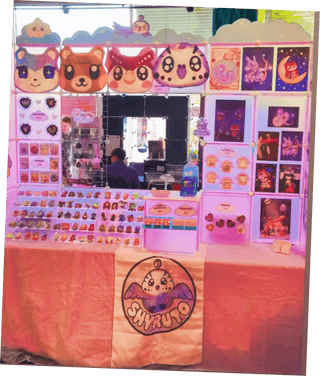
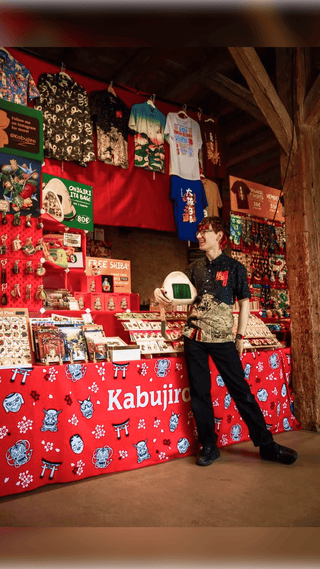
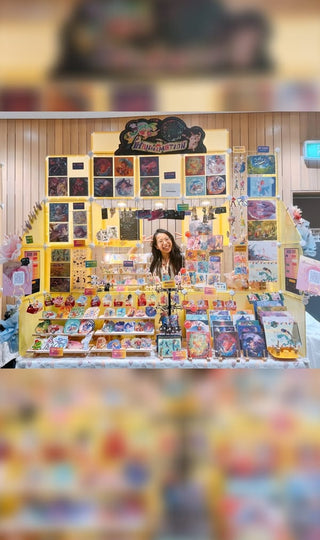
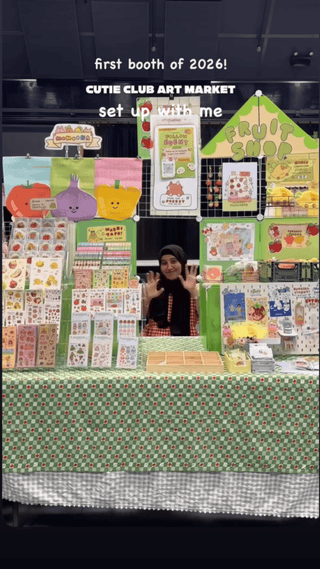
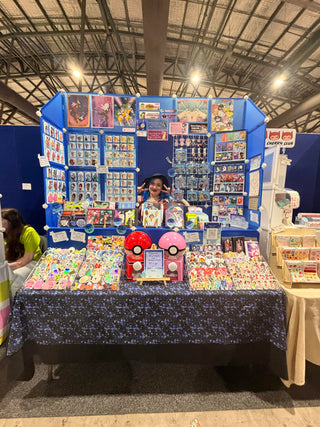
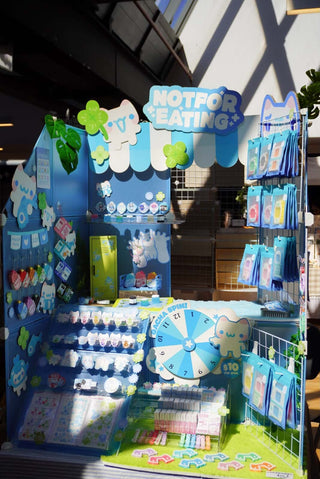
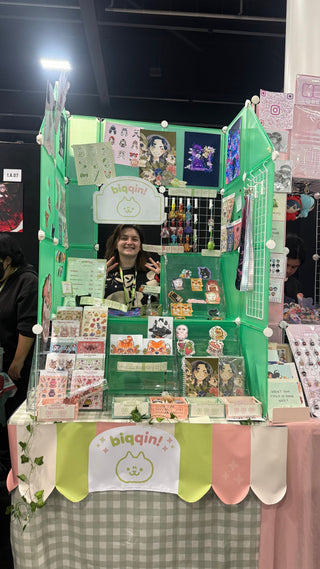
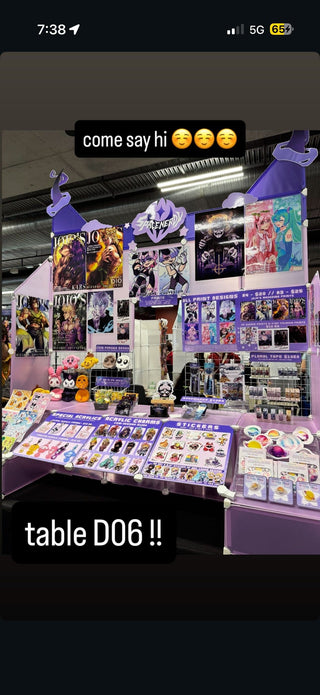
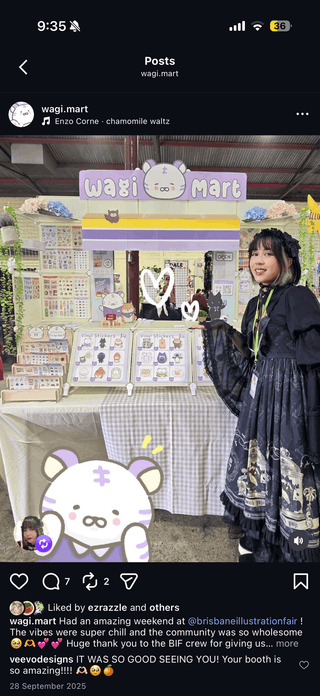
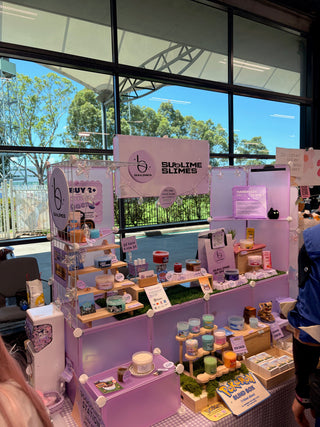
Here is the part that connects directly to revenue. Vendors with vertical, organised displays consistently outsell vendors with flat table layouts. It is not a mystery. Vertical displays are visible from further away, which means more people stop. More stops means more sales. Simple math.
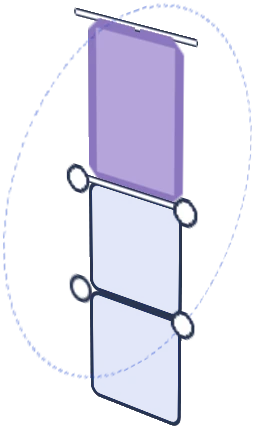
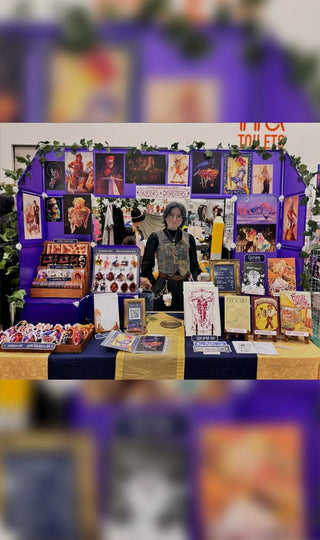
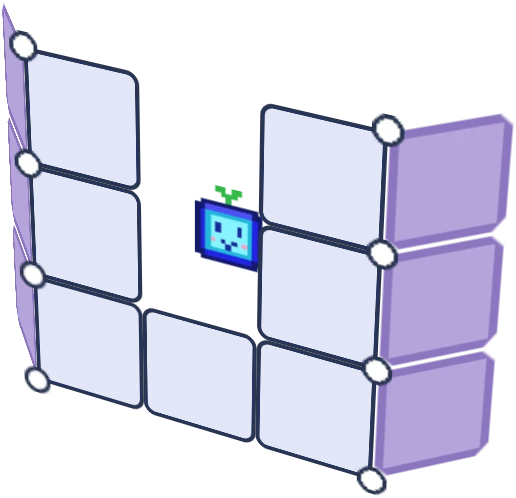
A modular display kit that stacks five panels high (175cm) on a standard table gives you that vertical presence. It also makes your booth look like a shop instead of a garage sale, which changes how customers perceive your pricing.
The Unsexy Infrastructure
Career artist alley vendors have systems for things that sound deeply boring but make the difference between profit and loss:
- Inventory tracking. Knowing what sold at which show so you print the right quantities next time.
- Show selection. Picking events based on past revenue per attendee, not just vibes.
- Display efficiency. A setup that takes 20 minutes instead of an hour means you are rested and SHARP when doors open.
- Product placement. Bestsellers at eye level. New items where curiosity draws the eye. Impulse buys at the edge.
- Pricing strategy. Round numbers, clear labels, tiered pricing that encourages upsells.
The Part That Feels Uncomfortable
Talking about money feels weird in creative spaces. It feels like it cheapens the art. But the vendors who do this full-time will tell you the opposite. Understanding your numbers means you can keep doing this. It means you can say no to bad shows, invest in better materials, and eventually make a living from your craft instead of subsidising it with a day job.
The business side of artist alley is not glamorous. It is spreadsheets and receipts and doing the math on whether that $250 table fee is worth the four-hour drive. But it is also the difference between burning out after a year and building something that LASTS.
If upgrading your display is part of that business plan, the full kit range has options from 24 panels up to 92. Pick the one that fits your table, your product line, and where you want to be six months from now.
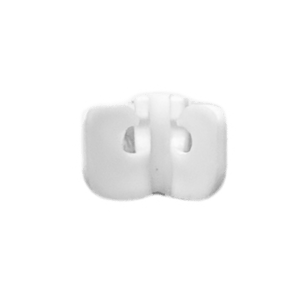
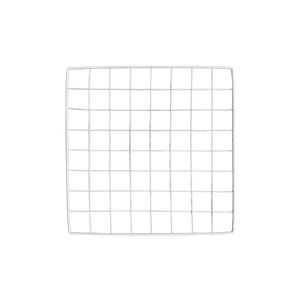
![Artistbooths Bundle Component Frosted Lavender Purple (PMS 2715 C) Panel Square (35x35 cm) [8-pack]](http://artistbooths.com/cdn/shop/files/artistbooths-bundle-component-frosted-lavender-purple-pms-2715-c-boof-panel-square-35x35-cm-8-pack-1214015634.png?v=1767318728&width=300)



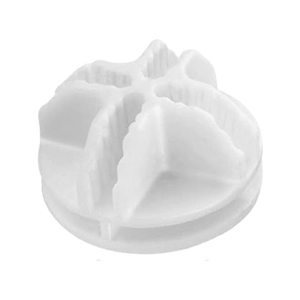
![Artistbooths Bundle Component Frosted Lilac Purple (PMS 263 C) BOOF Panel Triangle (35x35 cm) [2-pack]](http://artistbooths.com/cdn/shop/files/artistbooths-bundle-component-frosted-lilac-purple-pms-263-c-boof-panel-triangle-35x35-cm-2-pack-1214015625.png?v=1767318428&width=300)















![Square Panel [24 Pack] (35cm / 13.8in) Add-on](http://artistbooths.com/cdn/shop/files/Bulk_thumbnails-14.png?v=1782275611&width=320)
![Self Serve Hook with wire grid T clip 8cm [10 pack] Add-on](http://artistbooths.com/cdn/shop/files/artistbooths-booth-garage-t-section-self-serve-grid-hook-8cm-10pcs-1234044856.png?v=1776916212&width=320)
![Self serve display Grid & Intersection Hook expansion pack [12/24 Mixed pack] Add-on](http://artistbooths.com/cdn/shop/files/artistbooths-booth-garage-12-pack-2-grid-10-hooks-self-serve-display-grid-intersection-hook-expansion-pack-12-24-mixed-pcs-1234209872.png?v=1777005938&width=320)
![Multi Connector Expansion Pack - White - Bundle & Save [16/32 mixed pack] Add-on](http://artistbooths.com/cdn/shop/files/artistbooths-booth-garage-16-mixed-connector-pro-pack-connector-pro-expansion-pack-white-bundle-save-16-32-mixed-pcs-1234209875.png?v=1777005971&width=320)

![Mini Rectangle Panels [5-Pack] (17cm x 35cm/6.69in x 13.78in) Add-on](http://artistbooths.com/cdn/shop/files/artistbooths-booth-garage-frosted-amber-yellow-pms-1235-c-half-squares-10-pack-17cm-6-69in-1229850280.png?v=1774848457&width=320)
![Foot Connector Expansion Pack [4 Pcs] Add-on](http://artistbooths.com/cdn/shop/files/artistbooths-booth-garage-white-foot-connector-4-pcs-1233353183.png?v=1776908318&width=320)
![Mixed Single & Double Wire Shelf Clip [9 pack] Add-on](http://artistbooths.com/cdn/shop/files/mixed-single-double-wire-shelf-clip-9-pack_0c6e301c-8a76-411c-962a-8bf135de46c4.png?v=1792031372&width=320)
![Booth Wheel & Wheel Connector - white - [4 pack] Add-on](http://artistbooths.com/cdn/shop/files/artistbooths-booth-garage-booth-wheel-4pcs-wheel-connector-4-pcs-white-1234044880.png?v=1776916093&width=320)
![Corner Connector Expansion Pack [8 pack] Add-on](http://artistbooths.com/cdn/shop/files/artistbooths-booth-garage-white-corner-connector-expansion-pack-4-pcs-1234044868.png?v=1776915937&width=320)
![Edge Connector [8 pack] Add-on](http://artistbooths.com/cdn/shop/files/artistbooths-booth-garage-white-edge-connector-4-pcs-1234044876.png?v=1776915671&width=320)
![Single Shelf Wire Clip White [5 pack] Add-on](http://artistbooths.com/cdn/shop/files/artistbooths-booth-garage-single-shelf-wire-clip-white-5pcs-1234044883.png?v=1776915612&width=320)
![Double shelf wire clip white [4 pack] Add-on](http://artistbooths.com/cdn/shop/files/artistbooths-booth-garage-white-double-shelf-wire-clip-4-pack-1233353188.png?v=1776771613&width=320)
![Self serve display Grid & Fold Hook expansion pack [12/24 Mixed pack] Add-on](http://artistbooths.com/cdn/shop/files/artistbooths-booth-garage-12-pack-2-grid-10-fold-hooks-self-serve-display-grid-fold-hook-expansion-pack-12-24-mixed-pcs-1234209869.png?v=1777005852&width=320)
![Foldable Self Serve Hook (with wire clip) - [20 pack] Add-on](http://artistbooths.com/cdn/shop/files/artistbooths-booth-garage-white-foldable-self-serve-hook-wire-clip-version-10-pcs-1234214602.png?v=1777016318&width=320)
![Foldable Self Serve Hooks (with adhesive sheet) [20 pack] Add-on](http://artistbooths.com/cdn/shop/files/artistbooths-booth-garage-white-foldable-self-serve-hooks-adhesive-version-10-pcs-1234214609.png?v=1777016200&width=320)
![Metal mallet (with dual rubber/soft tap sides) [1 pc] Add-on](http://artistbooths.com/cdn/shop/files/artistbooths-bundle-component-dual-headed-metal-mallet-with-soft-tap-side-1209303104.png?v=1764380999&width=320)
![Panel Clamp Black 3cm Mouth [4 pcs] Add-on](http://artistbooths.com/cdn/shop/files/artistbooths-booth-garage-panel-clamp-2-pcs-1233843253.png?v=1776843493&width=320)