If you've spent any time in an artist alley Facebook group, you've seen the debate. Wire grid panels versus modular display panels, fought out in the comments section like it's a religious matter. It's not. They're just different tools that solve different problems, and which one is right for you depends on what you're selling and how much patience you have for zip ties.
We make modular panels, so you can assume some bias here. But we've also spent enough time next to wire grid booths to know exactly where they win and where they don't. Let's actually compare them instead of pretending one is objectively better.
What wire grid actually is
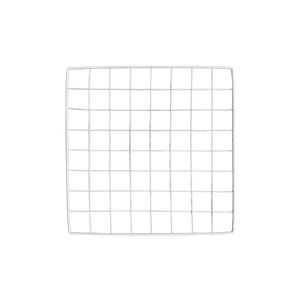
Wire grid panels are those metal cube-organizer-style grids you can buy at a hardware store or a container shop, usually zip-tied together into a wall. They're cheap to start with, especially if you already own some from a dorm room or a closet project. You clip on S-hooks or grid clips and hang prints, bags, or bagged pins straight off the wire.
The catch is everything after "cheap to start with." Wire grids are heavy per square foot of display, which matters a lot if you're flying instead of driving to your con. Each panel is flat on its own, but once you've got four or five of them plus all the clips and connectors, it adds up to a heavy, awkward stack. Most vendors end up needing a rolling cart or a car trunk, and if you're checking bags at the airport, you're usually paying oversized fees. Assembly is zip ties and grid clips, which means every setup and teardown is a little bit of a puzzle, and the wire can bend or bow after a few events of being crammed into a bag.
What modular panels solve
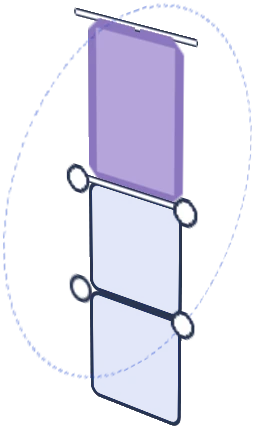
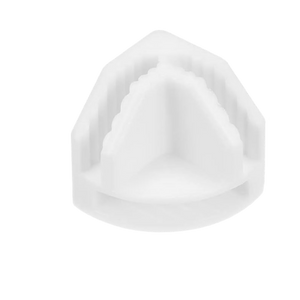
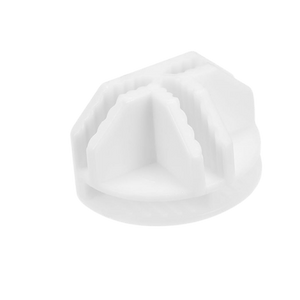
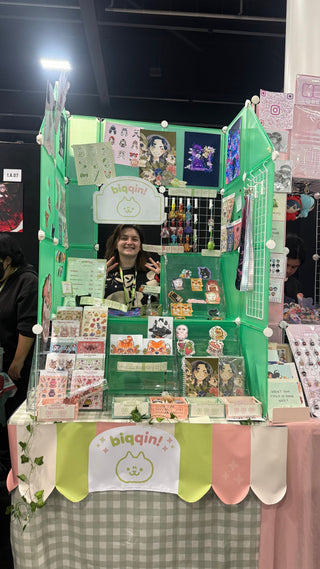
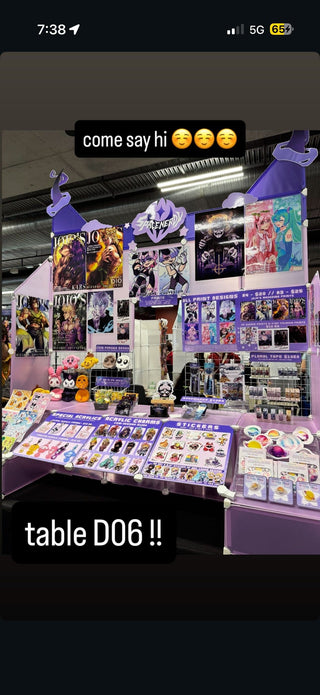
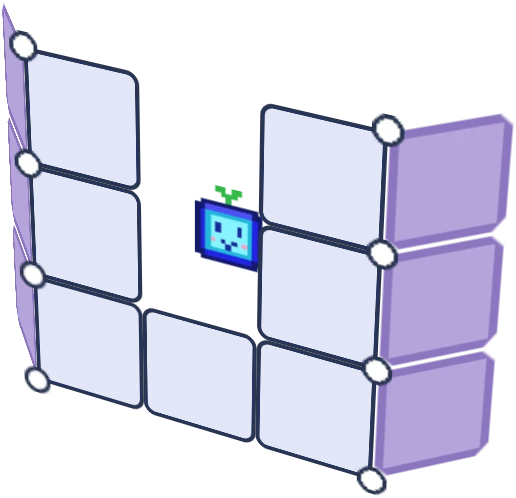
Modular panels (like Shapeshift or Core) use flat panels that click together with plastic connectors, no tools required. The panels themselves pack flat, so a 46-panel kit collapses down to something that fits in a suitcase, not a duffel bag shaped like a small door.
The other difference is the panels are frosted, light-diffusing polypropylene instead of open wire. That changes what you can do with lighting (more on that in a second) and it gives you an actual backdrop instead of a see-through grid, which matters if your table is against a wall with an ugly outlet or someone else's storage bins behind it.
Where wire grid still wins
- Upfront cost if you already own grids from another use
- Infinite hook placement (any square inch of open wire works)
- Familiar to buy, easy to find replacement pieces locally
Where modular panels win
- Packs flat, genuinely carry-on friendly (fits the standard 56 x 36 x 23cm allowance)
- No zip ties, no bent wire, no fighting the grid at 7am setup
- Frosted panels double as a lit backdrop instead of a see-through frame
- Colour options that actually match your table's aesthetic instead of "whatever grid colour I found"
The comparison, side by side
| Factor | Wire grid | Modular panels |
|---|---|---|
| Setup time | 20-40 min, depends on zip tie fatigue | Under 30 min once you know your layout |
| Packs flat | Yes, but heavy and awkward to carry in bulk | Yes, lightweight enough to carry on a plane |
| Flying with it | Rough, usually needs checked bags | Fits carry-on dimensions |
| Hook flexibility | Anywhere on the grid | Panel hook points, still plenty for prints/stickers/pins |
| Backdrop look | See-through, shows what's behind it | Solid frosted panel, lights diffuse through it |
| Starting cost | Low if reused, adds up in clips/hooks | Higher upfront, built to be reused for years |
So which one should you actually buy
If you're doing one local market a year and you already have grids sitting in a closet, use the grids. There's no reason to buy new gear for occasional low-stakes tabling.
If you're flying to conventions, tabling monthly, or you've hit the point where teardown at 6pm on day three makes you want to cry, that's when the packing and setup speed of modular panels starts to actually matter. A lot of artists we talk to made the switch after one bad wire-grid travel experience, usually involving an oversized bag fee or a grid panel that got bent in transit and never sat flush again.
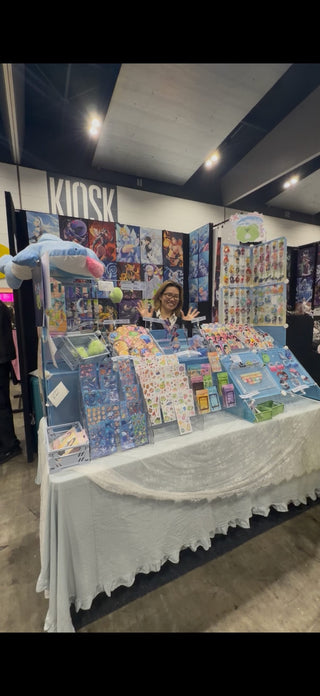
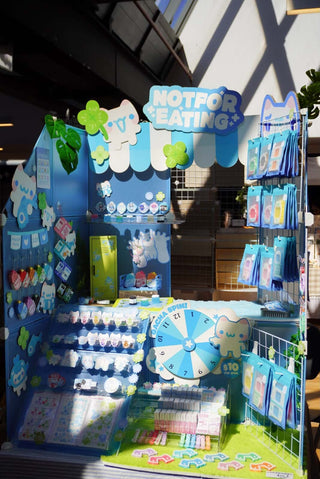
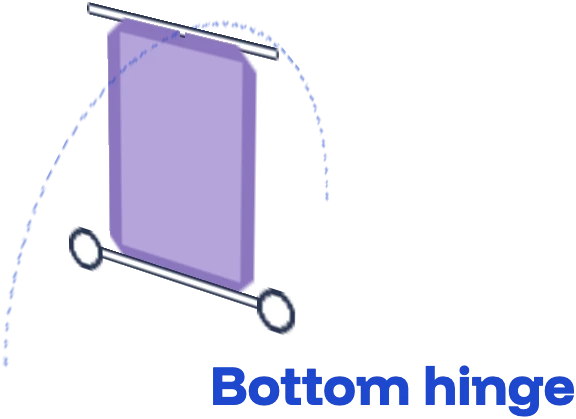
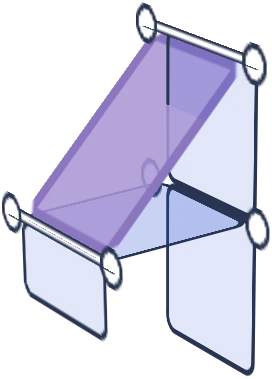
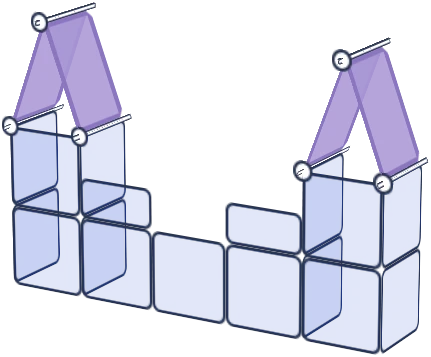
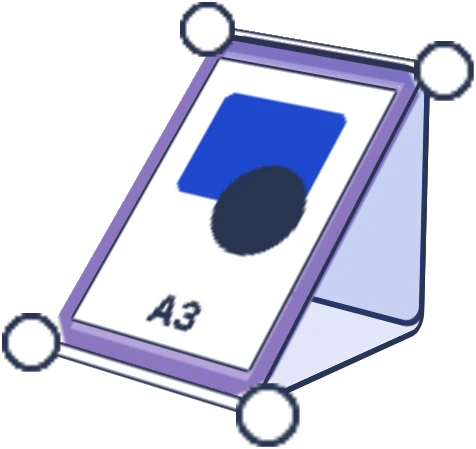
If you're building a full 180cm table wall and want the option to mix two colours instead of a single flat panel colour, the Shapeshift Duo tier is worth a look. It gives you a two-tone backdrop without needing to run two entirely separate systems. And shape is where a grid can't follow at all: our any-angle panel swings both ways, sets at any angle and is made to fit the triangles, so a panel booth can have awnings, roofs and arches, not only right angles.
Neither setup is wrong. Just be honest with yourself about how often you're hauling this thing, and how many times you're willing to zip-tie a grid back together in a hotel room the night before doors open.
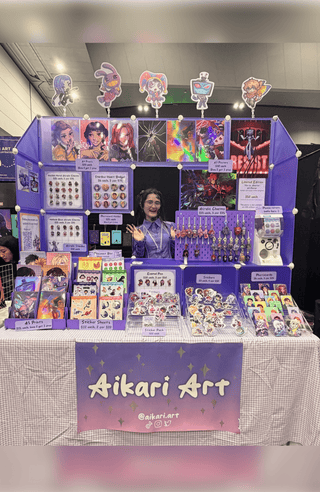
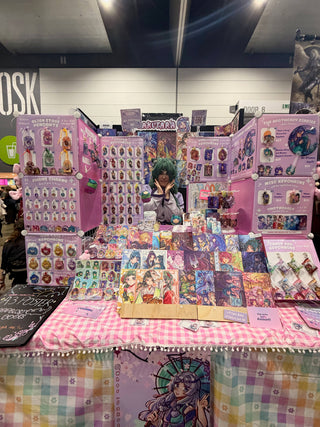
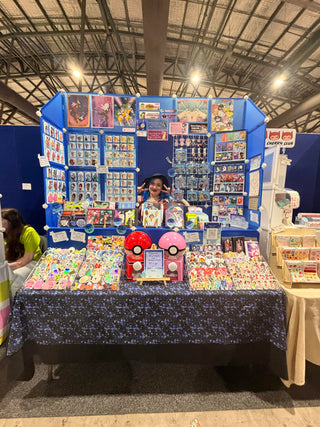
Curious what a Shapeshift kit actually looks like in person? Head to the Artist Booths homepage to see the full lineup and find the one that fits your table.
![Artistbooths Bundle Component Frosted Lavender Purple (PMS 2715 C) Panel Square (35x35 cm) [8-pack]](http://artistbooths.com/cdn/shop/files/artistbooths-bundle-component-frosted-lavender-purple-pms-2715-c-boof-panel-square-35x35-cm-8-pack-1214015634.png?v=1767318728&width=300)



![Artistbooths Bundle Component Frosted Lilac Purple (PMS 263 C) BOOF Panel Triangle (35x35 cm) [2-pack]](http://artistbooths.com/cdn/shop/files/artistbooths-bundle-component-frosted-lilac-purple-pms-263-c-boof-panel-triangle-35x35-cm-2-pack-1214015625.png?v=1767318428&width=300)






















![Square Panel [24 Pack] (35cm / 13.8in) Add-on](http://artistbooths.com/cdn/shop/files/Bulk_thumbnails-14.png?v=1782275611&width=320)
![Self Serve Hook with wire grid T clip 8cm [10 pack] Add-on](http://artistbooths.com/cdn/shop/files/artistbooths-booth-garage-t-section-self-serve-grid-hook-8cm-10pcs-1234044856.png?v=1776916212&width=320)
![Self serve display Grid & Intersection Hook expansion pack [12/24 Mixed pack] Add-on](http://artistbooths.com/cdn/shop/files/artistbooths-booth-garage-12-pack-2-grid-10-hooks-self-serve-display-grid-intersection-hook-expansion-pack-12-24-mixed-pcs-1234209872.png?v=1777005938&width=320)
![Multi Connector Expansion Pack - White - Bundle & Save [16/32 mixed pack] Add-on](http://artistbooths.com/cdn/shop/files/artistbooths-booth-garage-16-mixed-connector-pro-pack-connector-pro-expansion-pack-white-bundle-save-16-32-mixed-pcs-1234209875.png?v=1777005971&width=320)

![Mini Rectangle Panels [5-Pack] (17cm x 35cm/6.69in x 13.78in) Add-on](http://artistbooths.com/cdn/shop/files/artistbooths-booth-garage-frosted-amber-yellow-pms-1235-c-half-squares-10-pack-17cm-6-69in-1229850280.png?v=1774848457&width=320)
![Foot Connector Expansion Pack [4 Pcs] Add-on](http://artistbooths.com/cdn/shop/files/artistbooths-booth-garage-white-foot-connector-4-pcs-1233353183.png?v=1776908318&width=320)
![Mixed Single & Double Wire Shelf Clip [9 pack] Add-on](http://artistbooths.com/cdn/shop/files/mixed-single-double-wire-shelf-clip-9-pack_0c6e301c-8a76-411c-962a-8bf135de46c4.png?v=1792031372&width=320)
![Booth Wheel & Wheel Connector - white - [4 pack] Add-on](http://artistbooths.com/cdn/shop/files/artistbooths-booth-garage-booth-wheel-4pcs-wheel-connector-4-pcs-white-1234044880.png?v=1776916093&width=320)
![Corner Connector Expansion Pack [8 pack] Add-on](http://artistbooths.com/cdn/shop/files/artistbooths-booth-garage-white-corner-connector-expansion-pack-4-pcs-1234044868.png?v=1776915937&width=320)
![Edge Connector [8 pack] Add-on](http://artistbooths.com/cdn/shop/files/artistbooths-booth-garage-white-edge-connector-4-pcs-1234044876.png?v=1776915671&width=320)
![Single Shelf Wire Clip White [5 pack] Add-on](http://artistbooths.com/cdn/shop/files/artistbooths-booth-garage-single-shelf-wire-clip-white-5pcs-1234044883.png?v=1776915612&width=320)
![Double shelf wire clip white [4 pack] Add-on](http://artistbooths.com/cdn/shop/files/artistbooths-booth-garage-white-double-shelf-wire-clip-4-pack-1233353188.png?v=1776771613&width=320)
![Self serve display Grid & Fold Hook expansion pack [12/24 Mixed pack] Add-on](http://artistbooths.com/cdn/shop/files/artistbooths-booth-garage-12-pack-2-grid-10-fold-hooks-self-serve-display-grid-fold-hook-expansion-pack-12-24-mixed-pcs-1234209869.png?v=1777005852&width=320)
![Foldable Self Serve Hook (with wire clip) - [20 pack] Add-on](http://artistbooths.com/cdn/shop/files/artistbooths-booth-garage-white-foldable-self-serve-hook-wire-clip-version-10-pcs-1234214602.png?v=1777016318&width=320)
![Foldable Self Serve Hooks (with adhesive sheet) [20 pack] Add-on](http://artistbooths.com/cdn/shop/files/artistbooths-booth-garage-white-foldable-self-serve-hooks-adhesive-version-10-pcs-1234214609.png?v=1777016200&width=320)
![Metal mallet (with dual rubber/soft tap sides) [1 pc] Add-on](http://artistbooths.com/cdn/shop/files/artistbooths-bundle-component-dual-headed-metal-mallet-with-soft-tap-side-1209303104.png?v=1764380999&width=320)
![Panel Clamp Black 3cm Mouth [4 pcs] Add-on](http://artistbooths.com/cdn/shop/files/artistbooths-booth-garage-panel-clamp-2-pcs-1233843253.png?v=1776843493&width=320)