You did everything the checklists told you to do. Printed the stock, built the table, showed up early. And you still sold three stickers and a single print in eight hours while the table next to you sold out by lunch. This happens to almost everyone at least once, and it doesn't mean you should quit.
First, separate the money problem from the meaning problem
A slow show costs you money, that part's real and worth looking at honestly. But it's easy to let a bad sales day turn into a verdict on whether you're a real artist or whether this whole thing was a mistake. Those are two different conversations. Deal with the numbers first, calmly, before you let yourself spiral into the second one.
Actually audit what happened
Don't just feel bad about it, figure out why. Walk back through the day with specific questions:
- Was foot traffic generally slow for everyone, or just your table? Ask a neighboring vendor how their day went. If the whole aisle was dead, that's useful information and it's not about you.
- Could people actually see your prices from a normal walking distance? Squinting at a tiny price tag is a real reason people keep moving.
- Was your table readable at a glance, or did someone have to stop and study it to understand what you sell?
- Did you seem approachable, or were you buried behind your phone for long stretches?
- Was this event actually a good fit for your work? A horror art table at a kids' comic con is going to struggle no matter how good the art is.
A lot of alley veterans will tell you flatly that some conventions just don't match some audiences, and no amount of table styling fixes a fundamental mismatch. That's not a reflection on your art.
Keep a ranked list of shows
One slow show tells you almost nothing on its own. The pattern across five or six shows tells you everything. Start ranking events after each one: revenue, table cost, how much you enjoyed it, how far you traveled. After a year you'll have a real list of which cons are worth repeating and which ones you did once and don't need to do again. This is one of the most useful habits you can build early, because it turns "that was rough" into "that specific con is a low performer for me," which is a decision you can act on.
Don't overhaul everything overnight
The instinct after a bad show is to blow up your entire setup: new banner, new pricing, new product line, all before the next event. Resist that. Change one or two things at a time so you can actually tell what worked. If you swap your banner, reprice half your stock, and switch to a new display all at once, and the next show goes better, you won't know which change mattered.
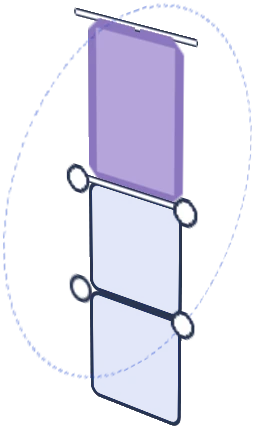
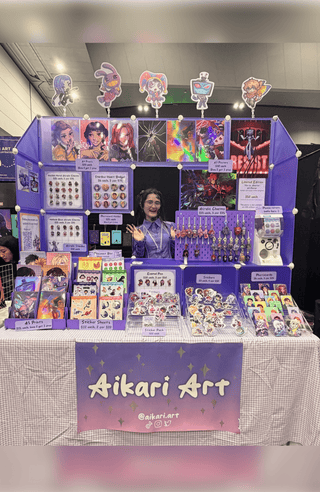
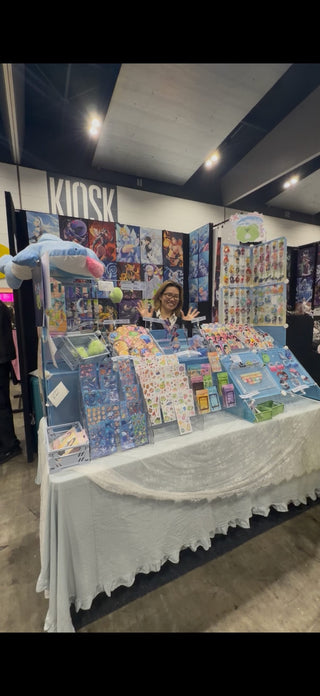
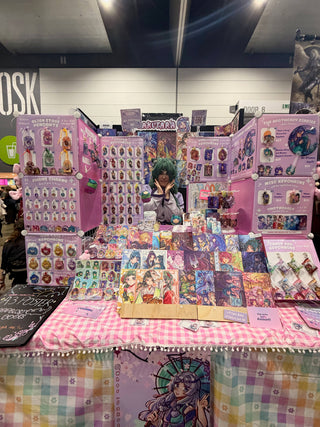
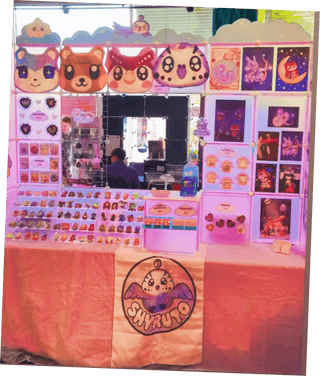
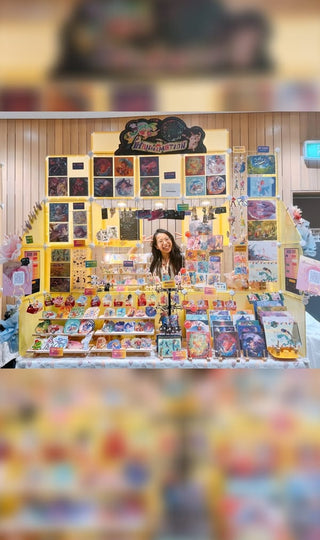
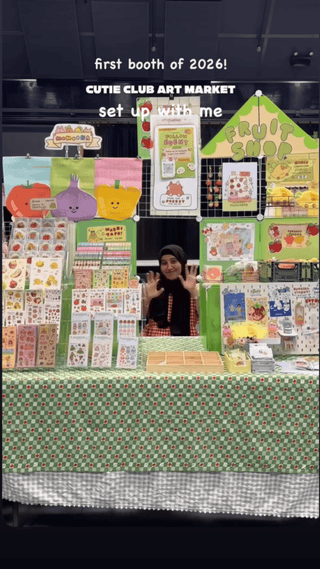
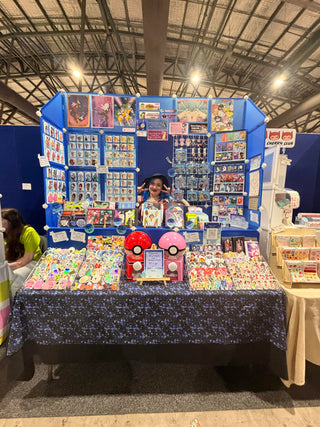
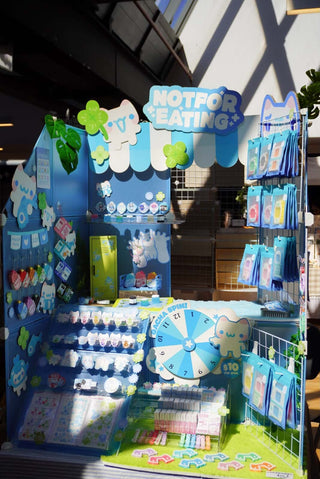
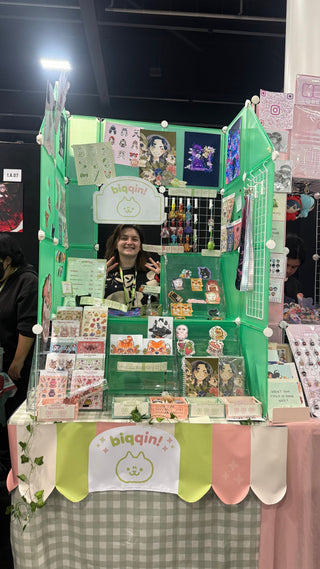
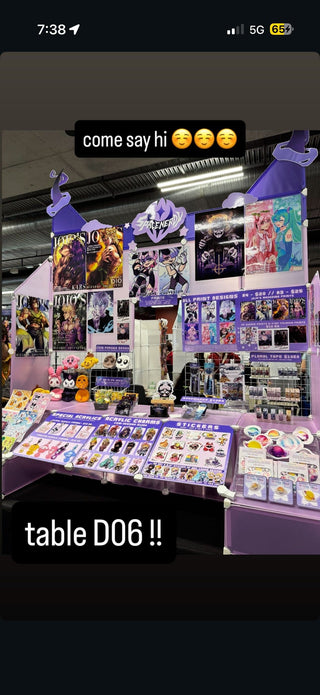
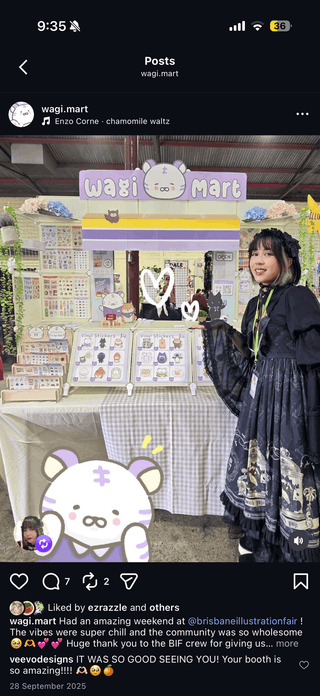
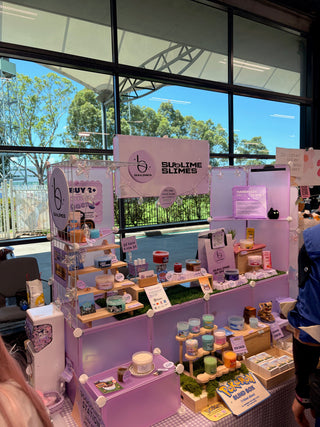
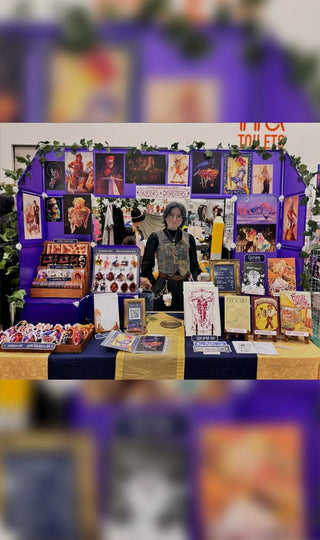
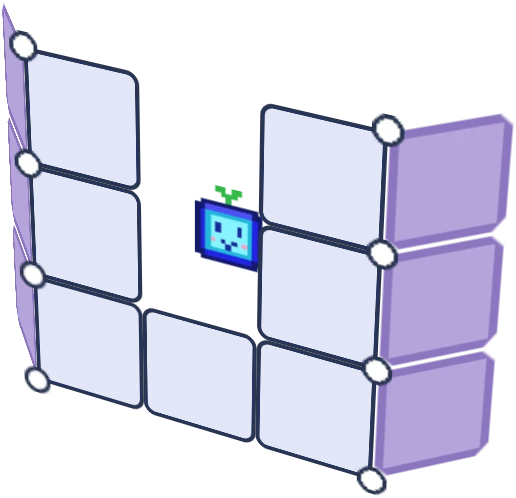
If your display itself was part of the problem, that's a fair thing to look at. A flat table of prints laid out edge to edge is easy to walk past without noticing. Vertical space catches eyes from further down the aisle, which is the whole reason booth risers and tiered stands show up in almost every "how to stand out" video from experienced alley vendors. If you're working with a low table setup, something like the Core kit (24 panels) gives you enough vertical backdrop to lift key pieces above table height without needing a full booth build.
Talk to other vendors, not just the internet
It's tempting to go home and doomscroll for answers. Talking to the vendor next to you is usually more useful. They saw the same room you did. They know if it was a slow year for that specific con, if the layout put your section in a dead zone, or if something else was going on. Most artists are generous about sharing this kind of context, especially with someone clearly having a rough day.
The math on one bad show
Work out your actual break-even: table fee, travel, printing costs, your time. One slow show against that number might still be a net loss, and it's okay to feel annoyed about that. But if your other shows are solid, one bad one is closer to a rounding error over a full year than a reason to stop. Most working artists have at least one show a year they'd rather forget.
What actually helps you keep going
Give yourself the same night to feel bad about it that you'd give a friend. Then get specific about what you're changing next time, not vague ('do better'), actual: reprice this item, reposition that piece, apply to a different con next spring. Specific plans are what turn a slow show into information instead of a reason to pack it all in.
Curious what a Shapeshift kit actually looks like in person? Head to the Artist Booths homepage to see the full lineup and find the one that fits your table.
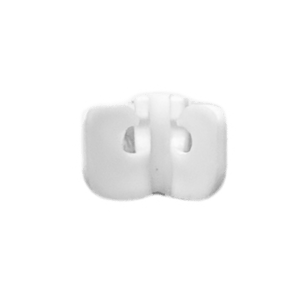
![Artistbooths Bundle Component Frosted Lavender Purple (PMS 2715 C) Panel Square (35x35 cm) [8-pack]](http://artistbooths.com/cdn/shop/files/artistbooths-bundle-component-frosted-lavender-purple-pms-2715-c-boof-panel-square-35x35-cm-8-pack-1214015634.png?v=1767318728&width=300)



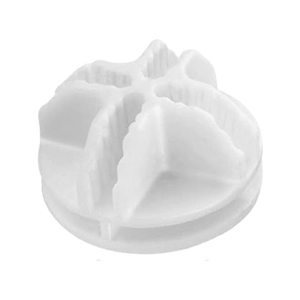
![Artistbooths Bundle Component Frosted Lilac Purple (PMS 263 C) BOOF Panel Triangle (35x35 cm) [2-pack]](http://artistbooths.com/cdn/shop/files/artistbooths-bundle-component-frosted-lilac-purple-pms-263-c-boof-panel-triangle-35x35-cm-2-pack-1214015625.png?v=1767318428&width=300)
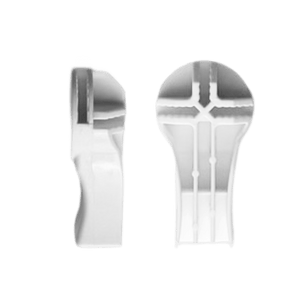















![Square Panel [24 Pack] (35cm / 13.8in) Add-on](http://artistbooths.com/cdn/shop/files/Bulk_thumbnails-14.png?v=1782275611&width=320)
![Self Serve Hook with wire grid T clip 8cm [10 pack] Add-on](http://artistbooths.com/cdn/shop/files/artistbooths-booth-garage-t-section-self-serve-grid-hook-8cm-10pcs-1234044856.png?v=1776916212&width=320)
![Self serve display Grid & Intersection Hook expansion pack [12/24 Mixed pack] Add-on](http://artistbooths.com/cdn/shop/files/artistbooths-booth-garage-12-pack-2-grid-10-hooks-self-serve-display-grid-intersection-hook-expansion-pack-12-24-mixed-pcs-1234209872.png?v=1777005938&width=320)
![Multi Connector Expansion Pack - White - Bundle & Save [16/32 mixed pack] Add-on](http://artistbooths.com/cdn/shop/files/artistbooths-booth-garage-16-mixed-connector-pro-pack-connector-pro-expansion-pack-white-bundle-save-16-32-mixed-pcs-1234209875.png?v=1777005971&width=320)

![Mini Rectangle Panels [5-Pack] (17cm x 35cm/6.69in x 13.78in) Add-on](http://artistbooths.com/cdn/shop/files/artistbooths-booth-garage-frosted-amber-yellow-pms-1235-c-half-squares-10-pack-17cm-6-69in-1229850280.png?v=1774848457&width=320)
![Foot Connector Expansion Pack [4 Pcs] Add-on](http://artistbooths.com/cdn/shop/files/artistbooths-booth-garage-white-foot-connector-4-pcs-1233353183.png?v=1776908318&width=320)
![Mixed Single & Double Wire Shelf Clip [9 pack] Add-on](http://artistbooths.com/cdn/shop/files/mixed-single-double-wire-shelf-clip-9-pack_0c6e301c-8a76-411c-962a-8bf135de46c4.png?v=1792031372&width=320)
![Booth Wheel & Wheel Connector - white - [4 pack] Add-on](http://artistbooths.com/cdn/shop/files/artistbooths-booth-garage-booth-wheel-4pcs-wheel-connector-4-pcs-white-1234044880.png?v=1776916093&width=320)
![Corner Connector Expansion Pack [8 pack] Add-on](http://artistbooths.com/cdn/shop/files/artistbooths-booth-garage-white-corner-connector-expansion-pack-4-pcs-1234044868.png?v=1776915937&width=320)
![Edge Connector [8 pack] Add-on](http://artistbooths.com/cdn/shop/files/artistbooths-booth-garage-white-edge-connector-4-pcs-1234044876.png?v=1776915671&width=320)
![Single Shelf Wire Clip White [5 pack] Add-on](http://artistbooths.com/cdn/shop/files/artistbooths-booth-garage-single-shelf-wire-clip-white-5pcs-1234044883.png?v=1776915612&width=320)
![Double shelf wire clip white [4 pack] Add-on](http://artistbooths.com/cdn/shop/files/artistbooths-booth-garage-white-double-shelf-wire-clip-4-pack-1233353188.png?v=1776771613&width=320)
![Self serve display Grid & Fold Hook expansion pack [12/24 Mixed pack] Add-on](http://artistbooths.com/cdn/shop/files/artistbooths-booth-garage-12-pack-2-grid-10-fold-hooks-self-serve-display-grid-fold-hook-expansion-pack-12-24-mixed-pcs-1234209869.png?v=1777005852&width=320)
![Foldable Self Serve Hook (with wire clip) - [20 pack] Add-on](http://artistbooths.com/cdn/shop/files/artistbooths-booth-garage-white-foldable-self-serve-hook-wire-clip-version-10-pcs-1234214602.png?v=1777016318&width=320)
![Foldable Self Serve Hooks (with adhesive sheet) [20 pack] Add-on](http://artistbooths.com/cdn/shop/files/artistbooths-booth-garage-white-foldable-self-serve-hooks-adhesive-version-10-pcs-1234214609.png?v=1777016200&width=320)
![Metal mallet (with dual rubber/soft tap sides) [1 pc] Add-on](http://artistbooths.com/cdn/shop/files/artistbooths-bundle-component-dual-headed-metal-mallet-with-soft-tap-side-1209303104.png?v=1764380999&width=320)
![Panel Clamp Black 3cm Mouth [4 pcs] Add-on](http://artistbooths.com/cdn/shop/files/artistbooths-booth-garage-panel-clamp-2-pcs-1233843253.png?v=1776843493&width=320)