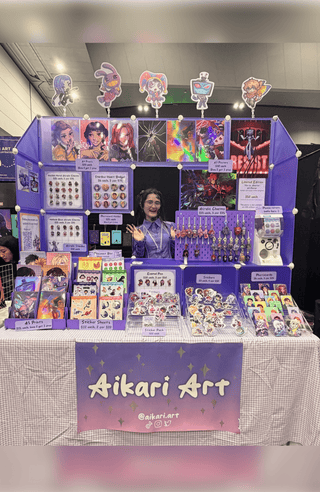
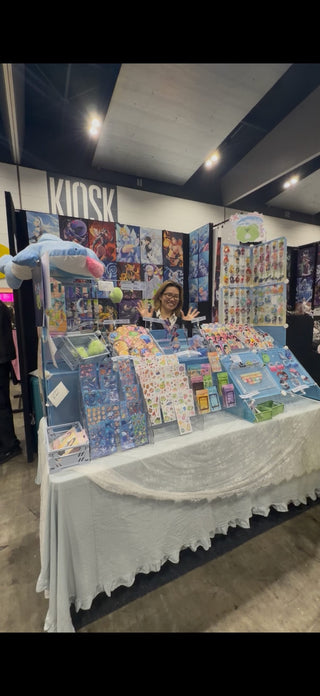
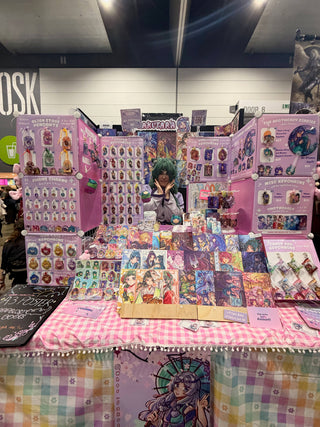
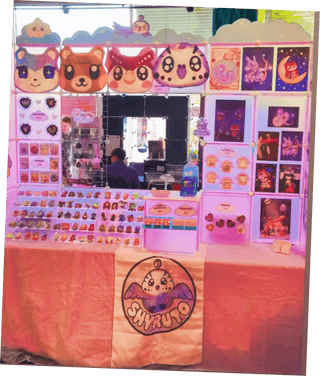
You're mid-conversation with a customer about a commission. Three people are standing at your grid wall right now, deciding between two prints. If your setup makes them wait for you to ring them up one at a time, you just lost at least one of those sales. Self-serve fixes exactly this problem, and it's the single biggest lever full-time vendors pull to move more product per hour.
Why self-serve actually works
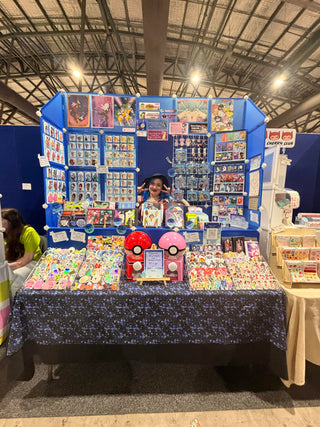
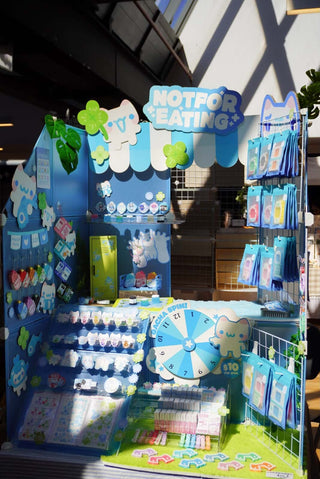
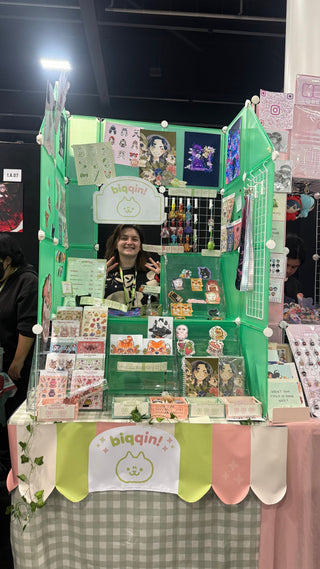
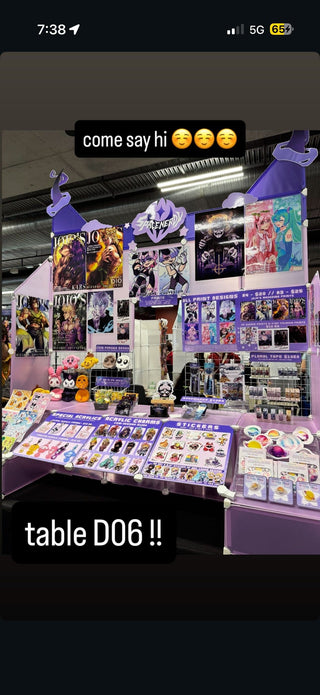
The math is simple. You only have one set of hands and one mouth. Every minute you spend walking a customer through a single small purchase is a minute you're not talking to the person who might buy your $200 commission, or the next three browsers who need a reason to stop. A self-serve grid wall lets customers pick prints, stickers, and small items off the wall THEMSELVES while you're occupied elsewhere. You're not the bottleneck anymore.
This isn't about being less personal. It's about being available for the interactions that actually need you, while low-friction purchases handle themselves.
What makes a grid actually self-serve
Clear pricing, clear categories, and items a customer can grab without asking permission. If someone has to flag you down to check a price or ask if something's for sale, it's not self-serve, it's just a wall with extra steps. The panels need to be sturdy enough that customers can browse and lift items off without your booth wobbling, which is where a proper modular system earns its keep over improvised pegboard.
Match your grid size to your actual product mix
Too small and you're restocking constantly or turning away impulse buys. Too big and you've got dead space eating your table footprint. This is where kit sizing matters. A Core kit at 24 panels suits someone testing self-serve at small local shows, while the 70-panel Shapeshift, the most popular size, handles a full flagship-con product spread without the wall looking sparse. Check the modular booth kit page to see how panel count maps to table space before you commit to a size.
Setup speed feeds directly into sell-through
A self-serve wall only works if it's actually up and dialed in before doors open. If you're still building your grid when the first wave of customers hits, you've lost the exact window self-serve is supposed to capture. A no-tools setup under 30 minutes means your wall is ready and organized before the room fills up, not scrambled together while people are already walking past.
Does self-serve work for higher-priced items too?
It works best for lower-friction items like prints and stickers where the decision is fast. Bigger commissions and custom pieces still benefit from a real conversation, which is exactly why self-serve frees you up to have those conversations.
Will customers actually just take things without paying?
Rare, and usually not worth designing your whole booth around avoiding. Keep your grid in your sightline and price tags obvious, and most vendors find self-serve pays for itself many times over in the sales it doesn't lose.
Explore the full kit lineup to find the grid size that actually fits how you sell, not just how you display.
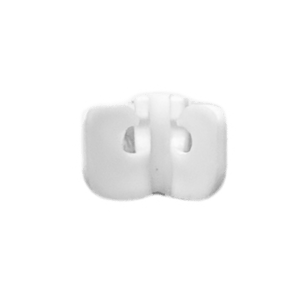
![Artistbooths Bundle Component Frosted Lavender Purple (PMS 2715 C) Panel Square (35x35 cm) [8-pack]](http://artistbooths.com/cdn/shop/files/artistbooths-bundle-component-frosted-lavender-purple-pms-2715-c-boof-panel-square-35x35-cm-8-pack-1214015634.png?v=1767318728&width=300)



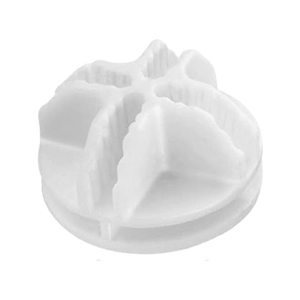
![Artistbooths Bundle Component Frosted Lilac Purple (PMS 263 C) BOOF Panel Triangle (35x35 cm) [2-pack]](http://artistbooths.com/cdn/shop/files/artistbooths-bundle-component-frosted-lilac-purple-pms-263-c-boof-panel-triangle-35x35-cm-2-pack-1214015625.png?v=1767318428&width=300)
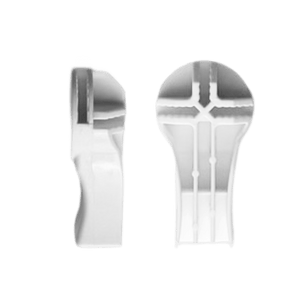


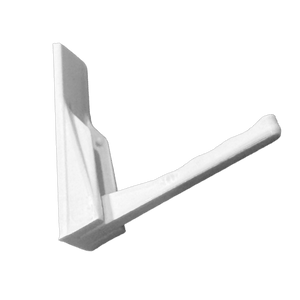
![Artistbooths Bundle Component Frosted Lilac Purple (PMS 263 C) BOOF Panel Half Square (35x17.5 cm) [4-pack]](http://artistbooths.com/cdn/shop/files/artistbooths-bundle-component-frosted-lilac-purple-pms-263-c-boof-panel-half-square-35x17-5-cm-4-pack-1214015628.png?v=1767318516&width=300)
















![Square Panel [24 Pack] (35cm / 13.8in) Add-on](http://artistbooths.com/cdn/shop/files/Bulk_thumbnails-14.png?v=1782275611&width=320)
![Self Serve Hook with wire grid T clip 8cm [10 pack] Add-on](http://artistbooths.com/cdn/shop/files/artistbooths-booth-garage-t-section-self-serve-grid-hook-8cm-10pcs-1234044856.png?v=1776916212&width=320)
![Self serve display Grid & Intersection Hook expansion pack [12/24 Mixed pack] Add-on](http://artistbooths.com/cdn/shop/files/artistbooths-booth-garage-12-pack-2-grid-10-hooks-self-serve-display-grid-intersection-hook-expansion-pack-12-24-mixed-pcs-1234209872.png?v=1777005938&width=320)
![Multi Connector Expansion Pack - White - Bundle & Save [16/32 mixed pack] Add-on](http://artistbooths.com/cdn/shop/files/artistbooths-booth-garage-16-mixed-connector-pro-pack-connector-pro-expansion-pack-white-bundle-save-16-32-mixed-pcs-1234209875.png?v=1777005971&width=320)

![Mini Rectangle Panels [5-Pack] (17cm x 35cm/6.69in x 13.78in) Add-on](http://artistbooths.com/cdn/shop/files/artistbooths-booth-garage-frosted-amber-yellow-pms-1235-c-half-squares-10-pack-17cm-6-69in-1229850280.png?v=1774848457&width=320)
![Foot Connector Expansion Pack [4 Pcs] Add-on](http://artistbooths.com/cdn/shop/files/artistbooths-booth-garage-white-foot-connector-4-pcs-1233353183.png?v=1776908318&width=320)
![Mixed Single & Double Wire Shelf Clip [9 pack] Add-on](http://artistbooths.com/cdn/shop/files/artistbooths-booth-garage-12-pack-2-grid-10-fold-hooks-self-serve-display-grid-fold-hook-expansion-pack-12-24-mixed-pcs-1234209869.png?v=1777005852&width=320)
![Booth Wheel & Wheel Connector - white - [4 pack] Add-on](http://artistbooths.com/cdn/shop/files/artistbooths-booth-garage-booth-wheel-4pcs-wheel-connector-4-pcs-white-1234044880.png?v=1776916093&width=320)
![Corner Connector Expansion Pack [8 pack] Add-on](http://artistbooths.com/cdn/shop/files/artistbooths-booth-garage-white-corner-connector-expansion-pack-4-pcs-1234044868.png?v=1776915937&width=320)
![Edge Connector [8 pack] Add-on](http://artistbooths.com/cdn/shop/files/artistbooths-booth-garage-white-edge-connector-4-pcs-1234044876.png?v=1776915671&width=320)
![Single Shelf Wire Clip White [5 pack] Add-on](http://artistbooths.com/cdn/shop/files/artistbooths-booth-garage-single-shelf-wire-clip-white-5pcs-1234044883.png?v=1776915612&width=320)
![Double shelf wire clip white [4 pack] Add-on](http://artistbooths.com/cdn/shop/files/artistbooths-booth-garage-white-double-shelf-wire-clip-4-pack-1233353188.png?v=1776771613&width=320)
![Foldable Self Serve Hook (with wire clip) - [20 pack] Add-on](http://artistbooths.com/cdn/shop/files/artistbooths-booth-garage-white-foldable-self-serve-hook-wire-clip-version-10-pcs-1234214602.png?v=1777016318&width=320)
![Foldable Self Serve Hooks (with adhesive sheet) [20 pack] Add-on](http://artistbooths.com/cdn/shop/files/artistbooths-booth-garage-white-foldable-self-serve-hooks-adhesive-version-10-pcs-1234214609.png?v=1777016200&width=320)
![Metal mallet (with dual rubber/soft tap sides) [1 pc] Add-on](http://artistbooths.com/cdn/shop/files/artistbooths-bundle-component-dual-headed-metal-mallet-with-soft-tap-side-1209303104.png?v=1764380999&width=320)
![Panel Clamp Black 3cm Mouth [4 pcs] Add-on](http://artistbooths.com/cdn/shop/files/artistbooths-booth-garage-panel-clamp-2-pcs-1233843253.png?v=1776843493&width=320)