Artist Back Alley Resources Blog

Rating Real Artist Alley Setups: What Works And What Doesn't

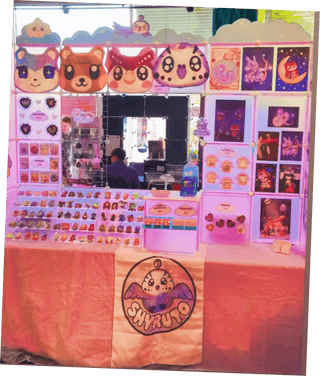
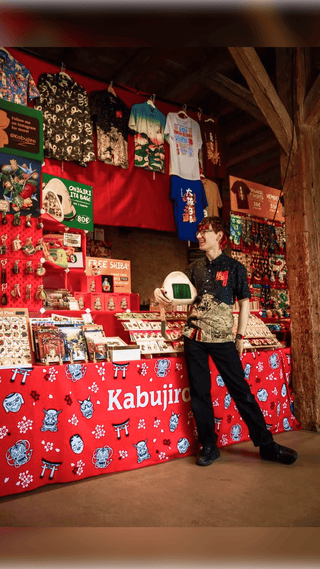
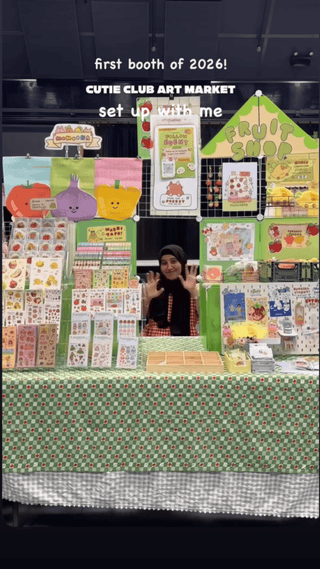
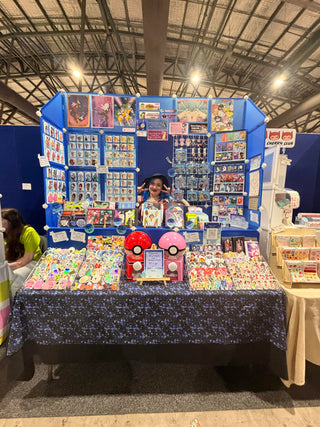
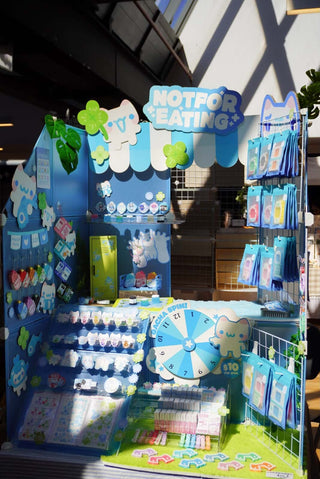
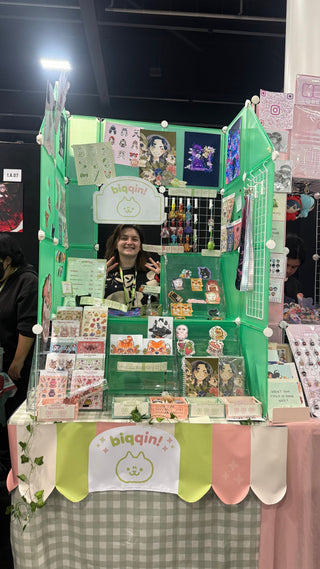
Let's do the thing every artist alley YouTuber does eventually. Rating booths. Not to be mean, just to call out what's actually working versus what's held together with hope and washi tape. If you've ever scrolled through con photos and thought "why does that booth look so much better than mine" this is for you. The A-tier setup: height, structure, breathing room The booths that stop people mid-walk all share three things. Height variation so the eye has somewhere to travel. A structure that doesn't wobble when someone leans on the table. And actual negative space around the hero pieces. These booths usually run on a real system, something like a Shapeshift kit with 70 panels, which happens to be the most popular size because it hits that sweet spot between coverage and portability. The C-tier setup: technically fine, forgettable These booths aren't BROKEN, they're just flat. Literally. Everything sits at table height, prints are neat but undifferentiated, and there's no clear focal point. It's not a disaster, it just doesn't sell as hard as it could. A taller build, even just adding one tier of panels, fixes this instantly. The F-tier setup: the collapsing table You know this one. Wire grid tipping forward under the weight of prints, a corner of the tablecloth sliding off, stock stacked so high the bottom items are basically inaccessible. This happens because the shelving wasn't rated for real inventory. Panels built to spec hold up to 5kg per shelf, which is a night-and-day difference from a bargain grid that starts bowing after twenty prints. The sneaky mistake even good booths make Harsh, flat lighting. Even a genuinely well-built booth can make the art look dull under direct light with no diffusion. Frosted panels solve this by softening the light so colors read true instead of washed out or glaring. It's a small detail, but it's the difference between art that pops in photos and art that looks flat in person. What actually separates a great booth from an average one? Structure and height. Great booths use vertical space and a system that doesn't sag or wobble. Average booths are usually just flat tables with good product. Is a taller display worth the extra setup time? Yes, and with the right kit it barely costs you time. A modular kit sets up in under 30 minutes with no tools, so going taller doesn't mean showing up an hour earlier. Do lighting mistakes really affect sales? They affect how your art LOOKS, which affects whether someone stops walking. Flat, harsh light makes even great pieces look washed out. If you're ready to move up a tier, check out a proper modular display kit that fits a standard 180cm table and actually holds real inventory. Browse the full kit lineup to find your size.

Grey Plastic Wire Grids Are Killing Your First Impression

Wire grids look cheap. They just do. You can hang the best art in the building on one and it will still photograph like a garage clearance rack. If you're using one right now, this isn't an attack, it's the most common upgrade every vendor eventually makes once they see the difference.Why grids read as cheap even when they're notWire grids were built for retail backrooms, not for selling art. The metal is thin, it flexes when you clip something heavy on it, and the gaps between wires create a busy visual noise behind everything you're trying to showcase. Your prints end up competing with a criss-cross pattern instead of sitting against a clean background. That noise is doing damage to your first impression before anyone even looks at the actual art.Grids also fight your lightingA lot of vendors add clip lights to their booth to make their prints pop, only to have that light scatter and glare off metal wire instead of landing evenly on the artwork. A flat, matte panel surface behaves completely differently. It holds light instead of bouncing it, so your prints actually look as good under booth lighting as they did on your monitor at home.What to use insteadA solid panel wall solves both problems at once. Frosted polypropylene panels give you a clean, even backdrop instead of a wire mesh, and they come in actual colours instead of gunmetal grey. Our modular display kit is built from 35x35cm panels with ABS connectors and PLA hooks, and it holds up to 5kg per shelf, so heavier prints, prop pieces, or hanging merch stay put without sagging or flexing the way a wire grid does. It sets up in under 30 minutes with no tools, so switching off a grid isn't a bigger hassle at load-in.Colour is the real upgradeThe biggest visible difference isn't even the material, it's the colour. A grid is grey. Always. A panel wall can be any of 19+ exclusive colours, which means your booth can actually match your brand or your art style instead of defaulting to whatever came with the folding table. That alone changes how professional your table looks from across the room.FAQAre wire grids really that much worse, or is this just aesthetics?It's both. The visual noise and glare are real functional problems, not just a style preference, and they affect how your art actually reads to a passing stranger.Will switching away from a grid mean carrying more stuff?Panels pack flat and fit a carry-on sized case (56x36x23cm), so it's a comparable footprint to most grid setups, just a much better looking one.Can I still hang the same items I hung on my grid?Yes, panel hooks are built to hold prints, small merch, and lightweight goods, with each shelf rated up to 5kg.If your grid is due for retirement, browse the full kit lineup and find a panel size that fits your table.

The Corner Squeeze: Making The Most Of A Tight Booth

Corner booths sound like an upgrade until you're standing in one. Two walls, an awkward angle, and a footprint that never quite matches the neat rectangle you planned around at home. Corners are their own puzzle, and most vendors solve it badly by just cramming their normal layout into an L shape and hoping.Corners are actually a display advantageHere's the reframe. A corner gives you two sightlines instead of one. People approach from two directions, which means twice the chance someone notices your table before they're standing right in front of it. The catch is you need a display that reads well from both angles, not just straight on.Build the corner itself, don't ignore itThe dead zone in most corner booths is the actual corner, the inside angle where two tables or two walls meet. Don't leave it empty or stack random backstock there. This is exactly where a taller vertical build earns its space, a panel wall anchored right in the corner becomes the visual anchor for the whole booth, visible from both approach angles at once.For a corner or a bigger booth footprint, the Shapeshift Max at 92 panels is built for exactly this, double tables, corners, bigger builds where you need real structural presence, not just a backdrop.Don't let the corner create blind spotsA tall build in the wrong spot can block your own sightline to half your table. Map out where you'll actually be standing before you commit to panel placement. Keep your working zone clear and let the display wrap around you, not box you in.Lighting hits differently in cornersCorner booths often catch less overhead lighting than center-aisle tables, especially near convention hall walls. A lighter panel colour reflects more ambient light and keeps your display from looking dim or flat. This is a small thing that makes a real difference by hour six of a long con day.Stability matters more at odd anglesCorner setups get bumped from two directions instead of one, foot traffic from both aisles. The ABS connectors and PLA hooks are built to lock tight, so your panels aren't shifting every time someone squeezes past. Each shelf holds up to 5kg, so your builds stay solid even under real convention traffic.Is a corner booth better or worse than a straight table?It depends on your display. Done right, a corner gets you two sightlines and more foot traffic exposure than a flat table in the middle of a row.What kit works best for an L-shaped corner footprint?The Shapeshift Max at 92 panels gives you enough structure to build across both angles of a corner without running out of panels halfway through.How do I keep a corner booth from feeling cramped?Anchor your tallest build in the actual corner and keep the rest of your layout lower, so you're not boxed in on every side.Corners are a puzzle, not a punishment. Check out our modular display kit or browse the full kit lineup to build a setup that actually works with your angle.

Matching Your Display To Your Brand Without Overthinking It

You don't need a design degree to make your booth look like it belongs to you. You need a couple of decisions made once, ahead of time, so you're not improvising at 7am in a loading dock with a roll of tape.Start from what you already have, not a blank pageYour brand already exists. It's in your logo, your Instagram grid, your packaging. The mistake is treating your booth as a separate design project instead of just an extension of that. Pull the two or three colours you already use everywhere else and put them on your panels. Done. You've matched your brand without inventing anything new.Pick panel colours like you'd pick a website themeIf you wouldn't put a colour on your storefront, don't put it on your booth. With 19+ exclusive frosted colours available, you've got real options here, not just "black or white." Browse all 19+ colours and pick the one or two that already show up in your branding. That's the whole decision.Keep the system simple so you don't relitigate it every showOverthinking usually happens because the setup is complicated enough that you're making new decisions every time. A modular system removes that. Our modular display kit sets up in under 30 minutes with no tools, so once you've picked your colours and your layout, it's the same booth every time. You stop rebuilding your brand identity from scratch at every single con.Let scale match your setup, not your ambitionMatching your brand isn't just about colour, it's about not looking underbuilt or overbuilt for the space you've got. Core at 24 panels suits a compact local market table. Shapeshift Base at 46 panels and Shapeshift at 70 panels (the most popular, genuine all-rounder) suit a standard con booth. Shapeshift Max at 92 panels is for artists who need a full wraparound wall. Picking the right tier matters as much as the colour, since an empty-looking oversized booth reads just as off-brand as a cramped one.Do I need a professional designer to figure out my booth colours?No. If you already have brand colours anywhere else, apply them here. That's the whole process for most artists.What if my brand colours don't exist as panel options?Get close. A near match across 19+ frosted colours reads as intentional far more than an exact-but-generic black or white setup does.How often should I change my booth colours?Rarely. Recognisability builds over multiple shows, so changing colours every con resets that progress each time.Matching your display to your brand isn't a big project. It's one decision, made once, repeated every show after that.

The Booth Mistakes We See At Almost Every Con

Walk any artist alley for ten minutes and you'll spot the same problems over and over. Sagging tables. Tiny signage nobody can read from six feet away. Art crammed together so tight you can't tell where one piece ends and the next begins. None of these are hard to fix. Most vendors just don't know they're doing it until someone points it out. So let's point it out. The wobbly, overloaded table This is the classic. A folding table piled with prints, a rickety wire rack leaning at a weird angle, and a stack of stock that's one bump away from becoming an avalanche. It happens because most tables and grids just aren't built to hold real inventory weight, so vendors improvise with milk crates and hope. The fix is a display actually rated for the load. Panels built correctly hold up to 5kg per shelf, so your prints and merch sit flat and stay put through a full con day, not just the first hour. Signage you need a magnifying glass to read Your prices are in 12pt font on a sticky note. Your banner is gorgeous but says nothing about what you actually sell. Attendees are moving FAST through aisles, scanning dozens of booths a minute. If they can't read your sign from a few steps away, they keep walking. Bigger text, bolder contrast, and signage placed at eye level does more for your sales than another hour of Instagram promo. No real structure, just tables and hope A lot of first-time booths are basically a table, a tablecloth, and whatever grid system was cheapest on sale. It works for one con. Then the grid tips, the corners curl, and setup takes forty minutes you don't have before doors open. A proper modular display kit solves this because it's designed as a system, not a pile of separate parts. It sets up in under 30 minutes with no tools, which matters a lot when you're trying to grab coffee before the doors open. Everything crammed onto one flat surface Height sells. A table that's all flat surface reads as cluttered even when it's organized, because everything is competing at the same eye level. Vertical panels let you build up, not just out, so your best pieces get their own moment instead of getting lost in a pile. How much weight can artist alley shelving actually hold? Panels built correctly hold up to 5kg per shelf. That's enough for stacked prints, stickers, small merch, and the occasional art book without any sagging. How long does setup actually take before a con? A modular kit sets up in under 30 minutes with no tools required, which is the difference between a calm morning and a panicked one. What's the most common booth mistake overall? Overloading a table or grid that was never rated for the weight. It's the root cause behind sagging, tipping, and that slow slide into chaos by hour three. If your setup is giving you any of these headaches, it might be time to look at a proper modular display kit built for exactly this job. You can also see the full kit lineup to find the size that fits your table and your inventory. See the full kit lineup before your next show.

What Makes Someone Actually Stop Walking In Artist Alley

Let's actually break this down instead of guessing. What makes a stranger, mid-stride, in a hallway full of distractions, physically stop and turn toward your table? It's not one thing. It's a stack of small signals firing in the right order, fast.First, something has to break their sightlineBefore anyone processes what your booth even is, something has to interrupt the automatic scan their eyes are doing. That's almost always height and colour. A wall standing above the table line, in a colour that isn't the room's default grey or beige, is the first trigger. This happens in a fraction of a second, before conscious thought, so it has to be visual, not verbal. You can't talk someone into noticing you from fifteen feet away.Second, their brain has to decide you're organizedOnce someone's eye catches on your booth, the next split-second judgment is whether it looks intentional or thrown together. A clean grid of panels reads as intentional. A pile of prints leaning against boxes reads as thrown together, even if the actual art is identical in quality. Repetition and symmetry are doing a lot of quiet convincing here.Third, they need a reason to close the distanceGetting noticed from far away and getting someone to actually walk over are two different jobs. This is where your top shelf matters most, it's the first thing at eye level once someone's closer. A strong hero piece up high, held on panel hooks rated for real weight (each shelf holds up to 5kg), keeps your best work visible and steady even as the day gets busy and people start bumping tables.Build the wall that does this work for youAll three of these come from the same physical setup. Our modular display kit uses 35x35cm frosted panels and ABS connectors to build a wall up to five panels high, around 175cm, in one of 19+ exclusive colours. No tools, under 30 minutes to build, and it packs down flat for travel. The Shapeshift kit (70 panels) is the most popular size because it covers a standard 180cm/6ft table without over- or under-building.FAQHow many seconds do I really have to catch someone's attention?Realistically a couple of seconds at most before their eyes move to the next table. That's why height and colour need to do the work before you ever speak.Does a messy table undo a good display wall?Yes. The wall gets people to look, but a cluttered table surface can undo that impression fast. Keep the table itself simple and let the wall carry the visual weight.What's the most overlooked part of a booth that actually stops people?Eye-level placement. Your strongest piece should sit roughly where a walking adult's eyes naturally land, not tucked low on the table.Ready to build a wall that does the stopping for you? browse the full kit lineup and pick your size.

Shared Table Etiquette And How To Still Stand Out

Nobody hands you a manual for sharing a table. You just show up, meet a stranger, and negotiate six feet of real estate in real time while attendees are already walking the aisle. Do it wrong and you spend the weekend annoyed at each other. Do it right and you both sell better.Respect the middle, own your edgesThe center of a shared table is neutral ground. Don't colonize it with your signage the second you finish setup. Build your tallest, boldest pieces toward your own outer edge and let the middle stay lower and shared. This alone prevents 90 percent of shared-table friction.Ask before you go tallGoing vertical is the best move on a small footprint, but it can block your neighbor's booth if you don't communicate first. A quick request like asking if it's okay to build up on your side takes ten seconds and saves an awkward teardown later. Most artists are relieved someone actually asked.Standing out doesn't mean taking overYou can have the more eye catching table without stepping on your neighbor. This is where a proper display system earns its keep. A grid of panels in a colour that matches your brand, holding your best pieces at eye level, reads more professional than a pile of prints no matter how good the art is. You don't need more space to look better. You need better structure in the space you've got.Keep your footprint on your own sideBins, totes, and backstock stay strictly under your own half of the table. Nothing sours a shared table relationship faster than someone's overflow creeping into the other person's leg room by hour three of day one.Setup speed is a courtesy, not just convenienceWhen you're sharing a table, you're often sharing a setup window too. A kit that assembles in under 30 minutes with no tools means your tablemate isn't standing around waiting on you to finish before they can start. Panels pack flat into a 56x36x23cm carry-on, so you're not spreading gear across the aisle while you dig through a bag for a wrench you forgot anyway.Who decides how the shared table gets split?Usually whoever arrives first proposes a split down the middle, then both artists adjust from there. Measure evenly and stick to it once you've agreed.What if my tablemate's setup is way bigger than mine?Bring it up early, not on day two. A calm conversation about rebalancing is normal and most artists would rather fix it than stew about it all weekend.Can a display kit actually help avoid conflict?Yes. Defined panel edges act as a visual boundary line, which removes a lot of the ambiguity that causes shared table disputes in the first place.Good etiquette and a strong table aren't in conflict. Start with our modular display kit or browse the full kit lineup to build a setup that plays well with others and still stands out.

How Your Table Colours Talk Before You Do

You don't get a second to explain your table. By the time someone's close enough to hear your voice, they've already decided whether to keep walking. Your colours made that call for them. Nobody read a sign. Nobody heard a pitch. Colour did the work.Colour is the fastest signal a brain processesBefore someone reads your logo or your prices, their brain has already registered colour and shape. That's just how vision works. So whatever your panels and table are saying in colour, that message lands first, and it lands whether you planned it or not. The only question is whether you're controlling that message or leaving it to chance.What different palettes actually saySoft pastels and frosted lilac tones read as gentle, whimsical, cute. Deep navy and slate tones read as serious, moody, premium. Warm colours read as approachable and cosy. None of these are better than the others, but they need to MATCH what's actually in your art, or you're sending a mixed signal before anyone even sees a print. A horror illustrator with a pastel booth is fighting their own colour choice the whole show.This is exactly why having real options matters. Artist Booths panels come in 19+ exclusive frosted colours, so the palette can actually say what your art says, instead of you settling for whatever neutral grid the venue provides. Browse all 19+ colours and find the tone that matches your voice as an artist.Let the material help the message, not mute itFlat, glossy plastic panels bounce light back hard and wash colour out under convention lighting. The 35x35cm frosted polypropylene panels used in our modular display kit diffuse that light instead, so colour reads richer and your art glows rather than glaring back at browsers. That's the difference between a colour palette that whispers and one that actually speaks.Say it consistently or it stops being a messageOne-off colour choices don't communicate anything, they just look random. The message only lands when it repeats: panels, table runner, price tags, all echoing the same two or three tones every single show. That consistency is what turns colour into an actual signal instead of noise.Can colour alone really influence whether someone stops at my table?Yes. It happens before conscious thought kicks in, which is exactly why it matters more than most artists assume.What if my art doesn't have an obvious dominant colour?Pick a neutral, like a frosted white or pale grey panel, and let your art provide all the colour contrast against a calm backdrop.Should my table colours change based on the con or market I'm at?No, keep it consistent. Recognisability across multiple shows is worth more than trying to match every individual venue's vibe.Your table colours are talking whether you like it or not. Might as well make sure they're saying the right thing.

The Boring Booth Trap Every New Vendor Falls Into

Every new vendor makes the same mistake and nobody warns them about it. You spend months on the art. You spend maybe twenty minutes thinking about the table. Then you get to the con and wonder why the booth next to you, with honestly weaker art, is pulling a bigger crowd.The trap is thinking the art speaks for itselfIt doesn't. Not in a room full of other good artists. Your table has maybe a second or two to earn a second look before someone's eyes move on to the next booth. If your setup is a tablecloth, a business card holder, and a wire grid you borrowed, it doesn't matter how good the work pinned to that grid is. The setup itself is telling people there's nothing worth stopping for.Grey and beige are the default, and the default is invisibleMost first-time vendors end up with the same look almost by accident, a plain cloth, a metal grid, whatever colour the table linen came in. It's not a choice, it's just what was available. But when 40 tables in a row all made the same non-choice, none of them stand out. Standing out doesn't require anything fancy. It just requires picking an actual colour on purpose, instead of inheriting the default.Height is the cheapest fix that makes the biggest differenceYou don't need custom carpentry or a five-figure booth budget to escape the boring booth trap. You need height. A wall behind your table, even a modest one, changes how your whole space reads. This is exactly what a modular panel system is for, snap-together 35x35cm panels on ABS connectors that build up to five panels high, around 175cm, with zero tools and about 30 minutes of setup. It fits a standard 180cm/6ft table, so you're not redesigning your whole booth footprint to get there.Pick a colour and commit to itThis is the easiest, cheapest win in the whole list. With 19+ exclusive colours to choose from, pick ONE that isn't grey, isn't beige, and isn't whatever every other table in your row is running. Build your wall in that colour and let your art sit on top of it. Our modular display kit makes this simple because the panels themselves are the colour, not a paint job or a fabric backdrop you have to source separately.FAQIs a boring booth really about the setup, not the art?Mostly, yes. Great art on a forgettable table still gets walked past because nobody stopped long enough to see it.What's the fastest fix for a first-time vendor on a budget?Height and one bold colour. Both come from the same panel system and don't require a big redesign.How long does it take to build a taller, more colourful booth?Under 30 minutes with no tools, so it's not a bigger time cost on the morning of the event.If you're rethinking your setup before your next event, browse the full kit lineup and pick a size and colour that actually stands out.

The Cohesive Booth Look That Turns Browsers Into Buyers

Most people walking an artist alley aisle are browsers, not buyers, right up until something makes them stop. You don't convert them with a bigger sign or a louder pitch. You convert them by looking like you know what you're doing, and cohesion is the fastest way to say that without saying anything.Browsers judge the whole booth, not the best pieceHere's a hard truth. Your strongest piece doesn't save a messy table. People scan the whole space in a glance, and a cluttered, mismatched setup drags down even your best work by association. A cohesive booth does the opposite, it lifts every piece on it, because the presentation already told the browser "this is worth a closer look."Consistency reads as competenceA messy table makes people assume messy business. Late shipping, sloppy packaging, no follow-through. Nobody says this out loud, but it's happening in their head in about two seconds. A clean, matching setup does the reverse work for you. It signals you're organised, which people quietly translate into "I can trust this person with my money."Building that consistency doesn't require custom fabrication. Panel systems like our modular display kit give you the same matching wall every single show, because it's the same panels every time, not whatever mismatched furniture you managed to borrow this month.Give people a reason to walk INTO the booth, not just past itA cohesive colour palette does something specific: it creates a frame. People feel more comfortable stepping inside a space that looks intentional, versus hovering at the edge of a chaotic one worried they'll knock something over. With 19+ exclusive frosted colours to choose from, you can build a frame around your art instead of a generic black grid. Browse all 19+ colours to see what pairs with your work.Practical cohesion beats aspirational cohesionNone of this works if it's a nightmare to set up. The panels are 35x35cm frosted polypropylene that diffuse light so your art actually glows instead of sitting flat under harsh fluorescents, and the whole wall goes up in under 30 minutes with no tools, fitting a standard 180cm table. That means you can actually maintain the cohesive look show after show instead of it falling apart by hour two of setup.Does a cohesive booth really change conversion, or is it just aesthetics?It changes conversion. A cohesive booth lowers the mental friction of stopping and looking, and lower friction means more people actually stop.I have a small booth. Does cohesion still matter at a small scale?Even more so. A small table has less room to hide mismatched elements, so every inconsistency stands out more, not less.What's the fastest fix if my current booth already feels chaotic?Pick one dominant panel colour and build everything else, table runner, signage, cards, around it. That single change does more than any individual decoration.Browsers become buyers the moment your booth stops making them work to understand it. Cohesion does that work for you, before you say a single word.

Tiny Table, Big Presence: What Actually Fits

You don't need a huge booth to look like a serious vendor. You need to stop trying to fit everything you own onto a tiny table and start being ruthless about what earns a spot there. Presence isn't about square footage. It's about what people see first.What a tiny table can actually holdLet's be real about the numbers. A standard table runs 180cm, about 6ft, but a lot of small con spaces hand out quarter and half tables that shrink that fast. On a footprint that small, flat bins and stacked totes just eat your whole surface. Panel systems don't. A single vertical grid gives you multiple shelves in the same footprint a couple of flat bins would take up.Each panel is 35x35cm, frosted polypropylene, holding up to 5kg per shelf. That's enough for prints, small plush, stickers, charm racks, all displayed at once instead of buried in a bin someone has to dig through.Cut the clutter before you buildThis is the part everyone skips. Before you even touch a panel, decide what your top 10 pieces are. Not your top 30. Ten. Everything else goes in a folder or a bin under the table. A tiny table crammed with everything you've ever made looks messy. A tiny table with ten hero pieces displayed clean looks CURATED, and curated sells.Vertical is non-negotiable on a small footprintIf your table is small, height is where you win. Build up with panels instead of laying everything flat. It changes your whole silhouette from across the room. People remember booths that had a shape, not booths that were just a table with stuff on it.Setup speed matters more when space is tightTiny tables often mean tighter aisles and less room to maneuver bulky setup gear. A kit that packs flat into a 56x36x23cm carry-on and assembles in under 30 minutes with no tools means you're not wrestling oversized shelving through a packed hallway or blocking your neighbor while you figure out a wrench.Colour does the heavy liftingOn a small table, colour is doing a lot of your branding work since you don't have much surface area for signage. Pick from 19+ exclusive panel colours and commit to one or two that match your brand. A clean colour story on a tiny table reads more professional than a rainbow of mismatched bins ever will.What's the smallest kit that still looks put together?The Core kit at 24 panels works well for compact accent displays where you just need a clean vertical wall, not a full backdrop.Should I bring my whole inventory to a tiny table event?No. Bring your best sellers and rotate stock from under the table as things sell. A packed table looks cluttered and actually sells worse.How do I make a small table look bigger than it is?Build vertically instead of flat, keep your colour palette tight, and leave a little breathing room between pieces instead of edge to edge coverage.Small table, real presence. Start with our modular display kit or browse the full kit lineup to find your fit.

How To Make People Stop At Your Table In A Room Of 200

Two hundred tables. One aisle. Maybe two seconds of attention per booth as people scan past looking for something specific, or nothing at all. That's the actual math you're competing against, and it's brutal. Here's how to win a bigger slice of it.Give the eye a reason to stop movingEyes in a crowd default to scanning, not stopping. Something has to physically interrupt that motion. That's almost always a combination of height and colour working together, a wall taller than the tables around it, in a colour nobody else on the row picked. It's not about being the prettiest booth. It's about being the one thing that breaks the pattern.Repeat your signature so it sticks after they walk awayGetting someone to stop is only half the job. You also want them to remember your booth later in the day when they're deciding where to spend what's left of their budget. A consistent visual signature, same colour wall, same panel layout, same logo placement, does that work for free. People start saying "go back to the blue booth" to their friends without even remembering your name yet.Make your booth work from 15 feet awayMost vendors design their table to look good up close. But the decision to walk over happens way before anyone's close enough to read small text. Design for the far view first: bold blocks of colour, a clean silhouette, minimal small print. Save the detail for once they're standing at your table.Build a wall, not a displayThis is where a modular panel system does the heavy lifting. Instead of assembling a display from mismatched grids and clip lights, you're building an actual wall behind your table using 35x35cm frosted panels and snap-together ABS connectors, no tools, no drilling. Builds go up to five panels high, around 175cm, tall enough to genuinely read as a booth from across the hall. The Core kit (24 panels) suits a smaller table, the Shapeshift (70 panels) is the all-rounder most vendors land on, and the Shapeshift Max (92 panels) is built for bigger footprints like double tables and corner spots. Check out our modular display kit to see how the sizes compare.FAQWhat's the single biggest thing that gets people to stop?Height combined with one strong colour. It's the fastest way to break out of a scanning eye's default path.Does a taller booth cost me setup time on a busy morning?No. A snap-together panel system sets up in under 30 minutes with no tools, so you're not trading visibility for load-in time.How do I stand out without clashing with the venue's own colours?Pick one dominant panel colour from a range built for this, there are 19+ exclusive colours, and let your art provide the contrast rather than fighting your own wall for attention.Planning your next event? browse the full kit lineup to find the right size for your table.

Building A Colour Palette That Makes Your Table Instantly Recognisable

Ask yourself this: could a regular from last year's con find your table again just by walking past it, without reading a single sign? If the answer is no, your booth doesn't have a colour palette. It has a pile of stuff.Pick your two or three colours and stop thereThe biggest mistake artists make is treating every element as its own decision. Panel colour, tablecloth, business card holder, price tags, all picked separately, all fighting each other. Instead, choose two or three colours total and force everything to live inside them. It sounds restrictive. It's actually what makes a booth look designed instead of assembled.With 19+ exclusive frosted colours available for panels, you've got enough range to build almost any palette without dyeing fabric or painting anything yourself. Browse all 19+ colours before you commit to one, since seeing them together changes what pairs well.Let your art pick the palette, not the other way aroundDon't start with "I like sage green" and then force your art to match it. Pull two or three dominant tones straight out of your own pieces. If your work runs moody and desaturated, a soft grape or slate panel colour will make your prints pop instead of competing with them. If your palette is bright and saturated, a neutral frosted white or pale colour lets the art carry the loud energy while the booth stays calm.Repeat it everywhere, not just on the wallsA palette only reads as a BRAND when it repeats. Panels, table runner, price cards, even your tote bags or stickers on the counter, same two or three colours showing up again and again. That repetition is what makes people recognise your table across a crowded aisle before they can even see your art clearly.Let the panels actually help your colours look goodThis part gets skipped a lot. The panels themselves are 35x35cm frosted polypropylene, which diffuses light instead of bouncing it back hard the way glossy plastic does. That matters for colour perception. A diffused, softly lit backdrop makes both your panel colour and your art's colour look richer, not washed out under convention hall lighting. Building the wall itself is simple too, our modular display kit sets up in under 30 minutes with no tools and fits a standard 180cm table.How many colours should my booth palette actually have?Two is safe, three is the practical ceiling. Past that it starts reading as random again, even if each individual colour is nice.Should my palette match my logo exactly?Close enough that people connect the two, but it doesn't need to be a pixel match. A family of tones around your brand colour works better than a single locked hex code.What if I sell prints across very different art styles?Pick a neutral palette that supports contrast, like a pale frosted colour, so wildly different pieces still sit inside one consistent frame instead of clashing with each other.A recognisable table isn't about having the biggest sign. It's about someone spotting your colours from thirty feet away and already knowing whose table it is before they arrive.

How To Build Up When You Can't Build Out

Every artist alley vendor hits this wall eventually. The table won't grow. The floor space is locked. You've got exactly what you've got, and no amount of wishing turns a 90cm table into a 6-footer. So you stop asking for more room and start asking a better question: how tall can I go?The math nobody tells youPanels stack. Five panels high gets you to roughly 175cm, about 69 inches. That's eye level for most adults and then some. Your display isn't competing for floor space anymore, it's competing for sightline, and sightline is free. Nobody's charging you extra table fee for the air above your table.This is the whole idea behind modular panel systems instead of folding tables and borrowed corkboard. You're not fighting your footprint, you're using the one dimension nobody else at the con thought to claim.Weight distribution matters more than you thinkGoing tall only works if it's stable. Wobbly displays are a liability, not a flex. Each shelf on our panels holds up to 5kg, and the ABS connectors plus PLA hooks are built to lock tight instead of sagging under a stack of prints and charms. Build your heaviest pieces low, lighter pieces up top. Basic physics, but it's the difference between a booth that impresses people and one that terrifies you every time someone walks past too fast.Pick the right kit for your height goalNot every vendor needs the same amount of vertical real estate. The Core kit at 24 panels is a lean starting point for small accent walls. The Shapeshift Base at 46 panels is the smart default for low or shared tables. The full Shapeshift at 70 panels is the most popular option and the all-rounder, built for a full 180cm table. If you're going big, corners, double tables, full booths, the Shapeshift Max at 92 panels is where you land.Vertical builds change how people shop your tableWhen your display goes up instead of out, browsing behavior changes. People stop and scan top to bottom instead of just glancing at what's directly in front of them. That's more eyeball time on more pieces, without asking for a single extra inch of floor space. Your booth reads BIGGER than it physically is, and that's the entire game in a cramped hall.How tall is too tall for an artist alley booth?Most cons cap booth height around 8 feet, though rules vary. A 175cm build sits comfortably under most limits while still towering over flat tabletop displays.Do I need special tools to build vertically?No tools needed. The panel and connector system snaps together by hand, and a full setup usually takes under 30 minutes.Will a tall display block my neighbor's booth?Keep your tallest panels toward your own back or outer edge, not facing into a shared table or aisle sightline, and you'll stay considerate while still standing out.You can't always build out. You can almost always build up. Check out our modular display kit or browse the full kit lineup to find your height.

Flat Table, Flat Sales: Why Height Changes Everything

Your prints are great. Your table is flat. And flat sells worse than it should, every single time. If you've ever watched a taller booth two rows over pull a crowd while your table sat quiet, this is why.Human eyes scan across, not downPeople walking a convention aisle scan roughly at eye level. A flat table sits well below that line, so unless someone is already looking for prints on tables, your entire display never enters their field of view. You could have the best piece in the hall sitting six inches from a stranger's hip and they'll never register it. Height puts your work where the scan actually happens.Flat tables cap how much you can even showThere's also just a practical ceiling. A flat table only has so much surface area, and once it's covered, everything competes for the same few square feet. Going vertical doesn't just help visibility, it gives you actual new space. Stack panels up to five high (around 175cm) behind your table and suddenly you've got a wall's worth of room for prints, stickers, hanging goods, without eating into your table surface at all.Height signals effort, and effort signals trustThis one's less obvious but just as real. A flat table with a tablecloth and a cash box looks like a garage sale, even if the art is incredible. A built-up booth with a structured wall behind it looks like a business. People trust businesses with their money more than they trust a folding table. That trust is doing quiet work on your conversion rate whether you notice it or not.Getting height without the headacheThe reason most new vendors stay flat isn't that they don't know height helps. It's that building a wall sounds like carpentry, and nobody wants to be drilling grommets into panelling at 11pm before a con. A snap-together system solves that. Our modular display kit uses 35x35cm frosted panels with ABS connectors and PLA hooks, no tools required, and the whole thing sets up in under 30 minutes. The Shapeshift kit (70 panels) is the most popular size because it scales well for a standard 180cm/6ft table, while the Shapeshift Max (92 panels) handles double tables, corners, and bigger booth footprints.FAQHow much extra height do I actually need to notice a difference?Even two panels high starts to break the flat sightline. Building toward five panels (around 175cm) gets you a real wall, not just a taller table.Will height make my table look cluttered?The opposite, usually. Vertical space spreads your work out so your table surface stays clear for transactions instead of being crammed with everything you own.Can I still travel light with a taller setup?Yes. Panels pack flat and fit a carry-on sized case (56x36x23cm), so height doesn't mean more luggage.If you're planning your next booth, browse the full kit lineup to find a size that fits your table and your travel setup.

Why Your Booth Should Look Like Your Art, Not A Yard Sale

You spent months on your art. Then you show up to the con and throw it on a folding table with a beige tablecloth from home. That mismatch is costing you sales, and most artists don't even notice it's happening.Here's the thing: people decide whether to stop at your table in about two seconds. They're not reading your prices yet. They're not even looking at individual pieces. They're reacting to the WHOLE picture. If that picture looks like a yard sale, your art gets judged like yard sale stuff, no matter how good it actually is.Your display is part of the artThink about it from the browser's side. A table full of random bins, mismatched risers, and a sign taped on with painter's tape reads as "I'm not serious about this." A table with a clean colour story and art that's actually lit properly reads as "this person has their stuff together." Same art. Completely different first impression.This is why a lot of artists switch to modular panel systems instead of cobbling together shelves and easels. With our modular display kit, you're building walls out of matching frosted panels instead of five different materials fighting each other for attention.Colour does the talking before you say a wordYou don't get to greet every person who walks by. Your booth has to sell itself for those few seconds before you open your mouth. A cohesive colour palette across your panels and signage does that job for you. There are 19+ exclusive frosted colours to pick from, so you can actually match your palette instead of settling for whatever black cube grid the venue rents out. Browse all 19+ colours and find the one that fits your art.The panels themselves work with your art, not against itThe 35x35cm frosted polypropylene panels aren't just a neutral backdrop. They diffuse light, so your prints glow instead of sitting behind harsh glare off plastic. That matters more than people think. Flat lighting kills detail in a print. Diffused light lets colour actually read the way you intended it.It fits the table you already haveNone of this requires a special table. The system fits a standard 180cm/6ft table and builds up to 5 panels high, about 175cm, so you get real wall space without hauling a truss system. Setup is under 30 minutes with no tools, and it packs flat back into your car after. Whether you're running Core at 24 panels for a small local market or Shapeshift's 70 panels for a full con booth, it's the same clean build every time.Do I need to match my panel colours exactly to my art style?Not exactly, just consciously. Pick two or three colours that echo what's already in your work, whether that's a warm palette or something cooler and moodier, and repeat them across your panels and table linens.Will a cohesive booth actually change my sales?It changes who stops. A cohesive look reads as intentional and gets more people to walk in and browse instead of glancing and moving on, which is the whole game at a con.What if my art style itself is chaotic or maximalist?Then your booth can be bold too, just bold on purpose. Pick a loud colour and commit to it everywhere, rather than letting five random elements clash by accident.A messy table makes people assume messy business. A cohesive one, built on panels that actually match your art, makes people assume you're worth trusting with their money. That's the whole pitch.

The Small Space Display Playbook For Shared Tables

Sharing a table is its own art form. You've got a stranger's elbow six inches from your prints, two totally different colour palettes fighting for the same sightline, and half the real estate you planned around. Nobody teaches you how to actually win at this. So let's fix that.Claim your zone early, and claim it verticallyThe first artist to set up usually sets the tone for the whole table. Don't spread flat across your half and hope your neighbor respects the invisible line. Build up instead. A vertical panel system marks your territory clearly without you having to say a word about it. Nobody argues with a grid of panels standing between two spaces.This is exactly what the Shapeshift Base kit was made for, 46 panels, built to start on shared or low tables around 90cm. You get a real backdrop, not a pile of prints leaning against a stand you're praying doesn't tip.Talk to your tablemate before you buildSounds obvious, still gets skipped constantly. Before you snap a single panel together, have the five minute conversation. Who's building tall on which side. Whose signage goes where. Whose color scheme dominates the middle. A five minute chat saves you from tearing down a wall of panels at 9am on day one because it's blocking someone's sign.Match your build height to your neighbor, don't just tower over themGoing taller than the person next to you feels like a power move. It's usually just rude, and it can block their visibility entirely, which nobody appreciates at a con where everyone needs each other's goodwill for the whole weekend. Step your build DOWN toward the shared middle and let your tallest panels live on your own outer edge.Setup speed is a shared-table superpowerWhen you're sharing a table, you're often also sharing a setup window. A system that assembles in under 30 minutes with no tools means you're not the reason the whole table is late opening. Panels pack flat into a 56x36x23cm carry-on, so you're not hauling oversized crates through a crowded hallway while your tablemate waits.Colour cohesion without losing your identityTwo artists, two brands, one table. The panels come in 19+ exclusive colours, so you can pick something that complements your neighbor instead of clashing outright. You don't need matching branding. You need panels that don't visually fight each other from ten feet away.How do I split a table fairly between two artists?Measure the table length and split it evenly, then agree on a shared middle zone for signage or a joint sign. Build your displays outward from your own half, not into theirs.What if my tablemate's display is louder than mine?Go vertical instead of competing on volume. A tall, clean panel wall reads as intentional even next to a busier neighbor.Can one kit really work for two different art styles?Yes. Panels are neutral frosted polypropylene, so they don't compete with your art, they frame it. Our modular display kit works the same whether you're doing pastel chibis or moody linework.Shared tables don't have to be a compromise. Browse the full kit lineup and build a setup that respects the space and still stands out.

The Booth That Stops People Mid-Walk: What Actually Works

You know the booth. You've seen it at every con. People are mid-stride, heading somewhere else entirely, and then they just stop. Feet planted, head turned. That's not luck. That's not a bigger budget either. It's a handful of specific things done right, and none of them require you to be a carpenter.It's a wall, not a tableThe booths that stop foot traffic almost never rely on the table itself. The table is just where transactions happen. The thing that actually catches people is what's standing behind and around it. A vertical wall of panels reads completely differently to a passing brain than a flat spread of prints on a cloth. One says shop. The other says stall.This is the whole idea behind a panel-based setup. Snap together frosted polypropylene panels with ABS connectors and PLA hooks, and you're not decorating a table anymore, you're building a small structure. Builds go up to five panels high, around 175cm, which is genuinely booth-sized, not table-sized.Symmetry and repetition read as intentionalRandom placement reads as clutter, even when the art itself is great. A booth that stops people usually has some kind of visual rhythm, repeated panel shapes, an even colour block, a consistent grid your prints hang from. Your brain processes repeated structure faster than chaos, and fast processing is exactly what you need in the few seconds someone has to decide whether you're worth their time.Colour block, don't colour scatterA wall of 30 different coloured prints pinned to a plain grid is busy. A wall in ONE strong panel colour, with your art as the accent, is a landmark. People remember "the booth with the electric blue wall" long before they remember your table number. With 19+ exclusive colours available, you're picking a signature, not just a background.It has to survive the actual convention floorNone of this matters if your setup wobbles every time someone bumps the table, or if it takes so long to build you're still assembling when doors open. A good panel system sets up in under 30 minutes with no tools, packs flat into a carry-on sized case (56x36x23cm), and holds up to 5kg per shelf so your prints and merch actually stay put through a busy Saturday. Our modular display kit was built around exactly this brief, fast to build, sturdy through a full con day, and it fits a standard 180cm/6ft table without hanging off the edges.FAQWhat actually makes people stop walking, height or colour?Height gets your booth into their peripheral vision first. Colour is what makes them decide it's worth a second look. You need both working together.How tall should my display actually be?Builds up to five panels high land around 175cm, tall enough to read as a wall from across a row, not just a taller table.Is a taller booth harder to pack up and travel with?Not if it's modular. Panels pack flat and fit a carry-on sized case, so height doesn't mean a harder load-in.Ready to plan your layout? browse the full kit lineup and find the size that matches your table.

Making A Half Table Feel Like A Full Booth

You show up. You get your table assignment. And it's a half table. Six feet just became three. Your stomach drops a little because you spent weeks planning a layout that doesn't fit anymore.Here's the truth: a half table isn't a punishment. It's a design problem, and design problems have solutions. The vendors who crush it on a half table aren't the ones with the most prints. They're the ones who stopped thinking flat and started thinking UP.Height is your new widthWhen your footprint shrinks, your only move left is vertical. A half table is roughly 90cm, which happens to be exactly where a Shapeshift Base kit starts out. It's built for this exact scenario, low tables, tight footprints, sharing space with another artist. You're not improvising with borrowed shelving anymore. You've got panels that click together in a grid, no tools, and you're set up before your tablemate finishes unpacking their tote bag.Panels are 35x35cm frosted polypropylene, and they hold up to 5kg per shelf. That's real weight. Prints, stickers, small plushies, charm boards, all stacked without the whole thing wobbling every time someone brushes past.Stop laying prints flatFlat bins on a half table eat your entire surface in about four rows. Vertical panels give you shelf after shelf in the same footprint. Suddenly your half table displays more product than some full tables running flat bins and a laptop stand.This is HUGE if you're a solo artist without a table partner to negotiate space with. You get your full presence back just by building upward instead of outward.Colour still matters at half sizeSmall booth, still needs to read from six feet away. Pick one or two panel colours and stick with them. A cluttered mismatched grid reads chaotic even when it's technically organized. With 19+ exclusive colours to choose from, you can actually match your brand instead of settling for whatever grid system your table mate already owns.Pack light, set up fastHalf tables usually mean early arrival windows get tight, especially if you're sharing with someone who also needs setup time. A kit that packs flat and fits into a 56x36x23cm carry-on means you're not wrestling oversized cube shelving through a convention center hallway. Setup itself takes under 30 minutes with zero tools, so you're not the reason your table partner is standing around waiting.Do I need a full Shapeshift kit for a half table?No. The Base kit at 46 panels is the smart default for exactly this size. It's built for 90cm and low or shared tables, so you're not overbuying panels you'll never use.Can I still grow into a bigger booth later?Yes. The panels are modular, so you add on as your table size grows instead of replacing the whole system. Many artists start on a half table and expand into a full 180cm table with the same core panels.Will vertical displays block sightlines to my tablemate?Keep your tallest builds toward your own edge and step height down toward the shared middle. It respects their space and still gives you a strong vertical presence.A half table doesn't have to feel like a downgrade. Browse the full kit lineup and find the setup that actually fits your footprint instead of fighting it.

Why Your Table Keeps Getting Walked Past (And How To Fix It)

You've been sitting there for three hours. Your art is good. You know it's good. And people just keep walking past like your table is invisible. It's not you. It's not your art. It's your setup.Here's the hard truth nobody tells new vendors: in a packed hall, eye level does the selling before you ever open your mouth. If everything on your table sits flat under 30cm, you're competing with 200 other flat tables. You blend in. And blending in in artist alley means getting walked past.Flat tables disappear in a crowdThink about walking down a row of 40 tables. Your eyes skim across at roughly the same height the whole time, unless something breaks that line. A flat table covered in prints is a wall of sameness. Nobody's brain flags it as worth stopping for. You need something that physically interrupts the sightline, something taller than the table next to you.This is why height matters so much more than most new vendors realize. A booth that climbs up, not just out, catches peripheral vision from ten feet away. People stop because something LOUD pulled their eye before they even processed what it was.Build up, not just outThis is where a modular panel system earns its keep. Instead of stacking prints flat on a tablecloth, you're building actual vertical real estate. Our modular display kit is built from 35x35cm frosted panels that snap together with ABS connectors, no tools, no glue, no drilling into a table you rented for the weekend. You can stack up to five panels high, which gets you close to 175cm of vertical display space behind your table. That's a wall. That's a booth. That's something people notice from across the room.The Shapeshift kit (70 panels) is the one most vendors land on because it scales with almost any table size and still fits carry-on. If your setup is smaller, the Core kit (24 panels) gets you started without overbuilding for a table you don't have room for. If you're running double tables or a corner spot, the Shapeshift Max (92 panels) is built for that scale.Colour is doing half the workHeight gets the eye there. Colour keeps it there for the extra half second you need. Grey wire grids and beige tablecloths photograph like a storage unit. A wall in a colour nobody else in the row picked reads as a destination, not a stall. There are 19+ exclusive colours to choose from, so you're not stuck matching whatever the con's standard grid comes in.FAQHow much height do I actually need to stop stop being walked past?Anything under table height blends in. Once you're building panels above the table, even two or three high, you're already ahead of half the room.Will a taller booth take longer to set up?Not with a snap-together system. Most vendors are fully built in under 30 minutes with no tools, so height doesn't cost you setup time.Do I need a huge table for a tall display?No. These panels fit a standard 180cm/6ft table, so you're adding height without needing more floor space.If you want to see the full range before deciding on a size, browse the full kit lineup and match it to your table.
60-second quizExtra 5% off

Find your ideal display kit size in 60 seconds & score extra 5% off

What are your planned setups going to be?
Half table (90cm / 3ft)
Sharing a table or just starting out
Full table (180cm / 6ft)
The standard table at most cons, markets & fairs
Double, corner or booth (360cm / 12ft)
Two tables, an L-shape, or a full corner stand
Free-standing booth (no table)
A floor-standing wall, no table needed
Select all that apply
How long do you plan to use it?
Just trying it out
1–3 times
Going to do markets more often
3–20 times/year
Multi-year use
Built to last, with room to grow
What do you display?
Small prints, cards, pins & stickers
Flat, lightweight, easy to pin
Large prints & posters
A2 and up, needs room to breathe
Large items : Apparel/bags/figures/3d merch/home goods
Heavier, bulkier pieces that need sturdy shelf framing
Jewellery, charms & keychains
Small and light, lots of little hooks
Select all that apply
How tall do you want it?
Keep it low so my table and wall stay visible
A clean, low backdrop that frames your work
Build tall framing for maximum impact
A towering wall that pulls eyes from across the hall
Your perfect kit and an extra 5% off are ready, pop in your email below to reveal both.
Unlock your kit & bonus 5% discount
Pop in your email and we'll reveal your extra 5% off, auto-applied at your cart.
Your result
Your perfect match
Your stall. Infinite installs.

Lightweight panels and snap on connectors shapeshift together.

Iron frame with frosted, water resistant surfaces for light & mighty structures.
Shapeshift kit part
Artistbooths Bundle Component Frosted Lavender Purple (PMS 2715 C) Panel Square (35x35 cm) [8-pack]
Shapeshift kit part
B-grade artist booth panel - discounted cosmetic-second stock
Shapeshift kit part
Shapeshift kit part
Artistbooths Bundle Component Frosted Lilac Purple (PMS 263 C) BOOF Panel Triangle (35x35 cm) [2-pack]
Shapeshift kit part
Shapeshift kit part
Shapeshift kit part
Shapeshift kit part
Shapeshift kit part
Artistbooths Bundle Component Frosted Lilac Purple (PMS 263 C) BOOF Panel Half Square (35x17.5 cm) [4-pack]
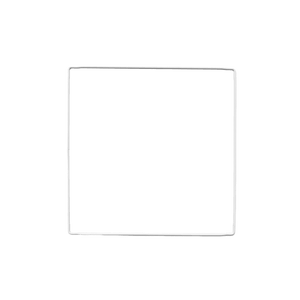
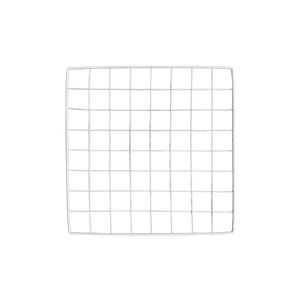
Artistbooths Single Connectors & Accessories White Square Wire Grid (35x35 cm)
Shapeshift kit part
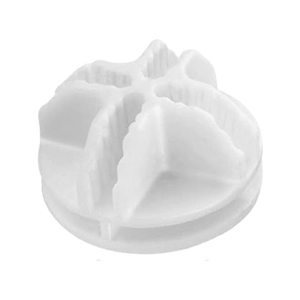
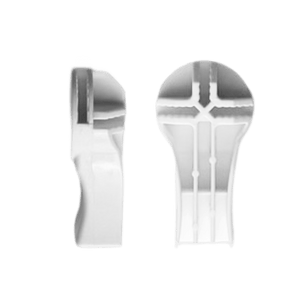
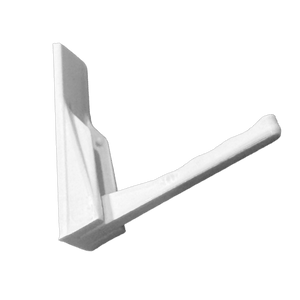
Artistbooths Single Connectors & Accessories White Edge Connector

Stand out pop ups.Shapeshifting setups.

Custom shapes and mix-and-match colours, built to sell for years.

Shop
Scroll

build a booth that builds a crowd

Little parts. Big payoff.

Why makers love our booths.

Every detail pulls its weight.

Stand out, sell out.

Be the eye-catching brand whose cohesive look draws a crowd and gets remembered.

Grow with you.

Enough parts to range products from small table to large booth.

Shape your brand.

Triangles, rectangles, hinge panels and connectors, in colours you mix yourself, for infinite display setups.

Be memorable.

Seasonal colours keep your brand unique. Frosted finish gives your art a soft spotlight.

Range & sell more.

Self-serve more customers with parts that make the most of smaller spaces.

Strong where it counts.

An iron core holds heavy stock whilst water-resistant surfaces shrug off spills and weather.

Packs light, carries safe.

Panels weigh 150g each. The double-wall carry box protects up to 30 decorated panels every trip.

Spares for years.

Every kit packs extra parts, so when you scale up or lose a piece you can keep running your vision.
Your products centre stage

Light diffusing panels.

Anti glare & bright product display

Build your modular display kit

Mix and match colours and shapes. Sized for market, convention and trade-show tables up to 6 ft / 180cm.

1. Choose kit size
2. Choose your kit colours
Only available
2aChoose your base 24 square & 22 multi-shape panel colours What colour would you like the first half of multi-shape panel colours to be?
Get a 2-colour setup by swapping 24 of 48 square panels to another colour.
Get a 2-colour setup by swapping half your panels to another colour.
2bWhat colour do you want the other 24 squares to be in this kit? What colour do you want the other half of your kit to be? Included · $0
Get a multi-colour setup by swapping 24 of 48 square panels in another colour.
Get a 2-colour setup by swapping half of square & multishape panels into another colour
3. Bundle and Save (optional)

Range more & get creative with more colours, shapes & display accessories.

15% off accessory packs when bundled with kits
Shapeshift Base Kit
46 multi-shape panels156 accessories

Shapeshift Base Kit Add-on

$699.00

Grape Purple Frosted

Square Panel [24 Pack] (35cm / 13.8in) Add-on

Square Panel [24 Pack] (35cm / 13.8in) Add-on

$450.00

Scarlet Red Frosted

Triangles Panels 4 Pack [35cm / 13.78in] Add-on

Triangles Panels 4 Pack [35cm / 13.78in] Add-on

$100.00

Terracotta Frosted

Half-Squares panels [5 Pack] [17.5x35cm / 6.89x13.78in] Add-on

Half-Squares panels [5 Pack] [17.5x35cm / 6.89x13.78in] Add-on

$100.00

Tan Brown Frosted

Self Serve Hook with wire grid T clip  8cm [10 pack] Add-on

Self Serve Hook with wire grid T clip 8cm [10 pack] Add-on

$40.00

Self serve display Grid & Intersection Hook expansion pack [12/24 Mixed pack] Add-on

Self serve display Grid & Intersection Hook expansion pack [12/24 Mixed pack] Add-on

$100.00

Multi Connector Expansion Pack - White - Bundle & Save [16/32 mixed pack] Add-on

Multi Connector Expansion Pack - White - Bundle & Save [16/32 mixed pack] Add-on

$120.00

Square Wire Grid Expansion Pack - 35cm x 35cm/13.7"x13.7" Add-on

Square Wire Grid Expansion Pack - 35cm x 35cm/13.7"x13.7" Add-on

$60.00

Hinged Square panels [5 Pack] [35cm / 13.78in] Add-on

Hinged Square panels [5 Pack] [35cm / 13.78in] Add-on

$100.00

Forest Green Frosted

Mini Rectangle Panels [5-Pack] (17cm x 35cm/6.69in x 13.78in) Add-on

Mini Rectangle Panels [5-Pack] (17cm x 35cm/6.69in x 13.78in) Add-on

$100.00

Amber Yellow Frosted

Foot Connector Expansion Pack [4 Pcs] Add-on

Foot Connector Expansion Pack [4 Pcs] Add-on

$59.00

Mixed Single & Double Wire Shelf Clip [9 pack] Add-on

Mixed Single & Double Wire Shelf Clip [9 pack] Add-on

$45.00

Booth Wheel & Wheel Connector - white - [4 pack] Add-on

Booth Wheel & Wheel Connector - white - [4 pack] Add-on

$60.00

Corner Connector Expansion Pack [8 pack] Add-on

Corner Connector Expansion Pack [8 pack] Add-on

$60.00

Edge Connector [8 pack] Add-on

Edge Connector [8 pack] Add-on

$60.00

Single Shelf Wire Clip White [5 pack] Add-on

Single Shelf Wire Clip White [5 pack] Add-on

$35.00

Double shelf wire clip white [4 pack] Add-on

Double shelf wire clip white [4 pack] Add-on

$30.00

Self serve display Grid & Fold Hook expansion pack [12/24 Mixed pack] Add-on

Self serve display Grid & Fold Hook expansion pack [12/24 Mixed pack] Add-on

$110.00

Foldable Self Serve Hook (with wire clip) - [20 pack] Add-on

Foldable Self Serve Hook (with wire clip) - [20 pack] Add-on

$80.00

White

Foldable Self Serve Hooks (with adhesive sheet) [20 pack] Add-on

Foldable Self Serve Hooks (with adhesive sheet) [20 pack] Add-on

$50.00

White

Metal mallet (with dual rubber/soft tap sides) [1 pc] Add-on

Metal mallet (with dual rubber/soft tap sides) [1 pc] Add-on

$40.00

Panel Clamp Black 3cm Mouth [4 pcs] Add-on

Panel Clamp Black 3cm Mouth [4 pcs] Add-on

$40.00

17" ITA Tote (40x35cm) Puffy Purple + Pin pad with 5 pockets Add-On

17" ITA Tote (40x35cm) Puffy Purple + Pin pad with 5 pockets Add-On

$129.00

Foldable Croc Hooks (adhesive) - 10-pack

Foldable Croc Hooks (adhesive) - 10-pack

$50.00

Black

Dual headed metal mallet (with soft tap side)

Dual headed metal mallet (with soft tap side)

$40.00

Your bundle
Free express shipping deal
Orders over $300 AUD
dhm
Free Exp. Shipping (2-7 bus.days) d h m
Your selection
American Express Apple Pay BancontactGoogle Pay Mastercard Shop Pay Union PayVisa JCBDiscoverDiners ClubMaestro
🌐 We ship globally express tracked⭐ 4.9🇦🇺 Designed in Aus
Build your own
Duo color display
Colorful display

Modular cube panels that snap together in minutes. Pick a color to start with and build & grow. for years.

Modular artist display booth at a craft market
Indoor pet playpen enclosure