Artist Back Alley Resources Blog

How Touring Artists Pack A Year's Worth Of Cons Into One System

Mel does 22 shows a year. Melbourne, Sydney, Brisbane, Adelaide, plus a couple of interstate pop-ups that weren't on the original plan. She didn't start with a system. She built one out of necessity after missing a flight because her old display wouldn't fit through the gate. The Breaking Point Her first year was chaos. Two suitcases, a poster tube, and a tote bag stuffed with connectors that kept poking through the fabric. She checked everything. Oversized fees ate her margins. One show in Brisbane, the airline lost her display bag entirely. She spent setup morning building a makeshift booth out of cardboard and panic. That was the last time she travelled with a setup that couldn't go carry-on. The Switch She moved to a modular display kit the following season. Forty-six panels, flat, in a single carry-on bag. The first thing she noticed: she could pack the night before without dreading it. The second thing: she stopped paying oversized fees ENTIRELY. The panels doubled as print protectors. She slid her bestselling A3 prints between the flat panels and they arrived crease-free every time. No more poster tubes rolling around under the seat. The System She Uses Now Mel runs two bags for every show. Booth bag (panels, connectors, hooks, tablecloth) and product bag (prints sorted by size, stickers in a binder, pins on a display board that lies flat). The booth bag stays packed between shows. She restocks the product bag the night before. Setup takes her 20 minutes. Teardown takes 15. She's in the car before most vendors have finished rolling their banners. What Changed Beyond Logistics She applies to more shows now. Not because she has more time, but because the friction is gone. When packing takes 20 minutes instead of an evening, saying yes to a last-minute show stops being stressful. She added six shows to her calendar this year just because she COULD. That's the part nobody talks about. A better packing system doesn't just save time. It changes which opportunities you say yes to. Browse the full kit range and see which kit fits your season.

Local Comic Shows: Building A Display For Smaller Crowds

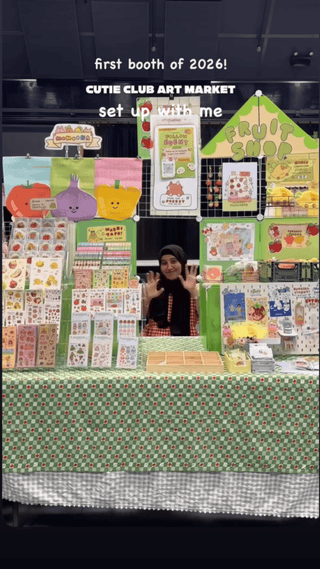
First local comic show I ever tabled at, I brought the same setup I'd use for a huge convention. Tall panels, packed wall of prints, the works. Thirty people walked past me in an hour and not one of them stopped. Not because the art was bad. Because the booth felt like it was shouting at a room that only had forty people in it.A friend running the table next to me had almost nothing up. A few prints at eye level, one small sign, and actual space to breathe around her work. People stopped there constantly. She wasn't competing with a wall of noise like she would at a big con, so she didn't build one. She built something you could actually look at without feeling rushed.That was the lesson. Small local shows aren't a mini version of a big con, they're their own thing entirely. The crowd is thinner but slower. People aren't power-walking past a hundred booths, they're browsing five tables in a church hall or a community center gym. They'll actually read your signage. They'll ask questions. Your booth doesn't need to scream to be seen, it needs to be worth stopping at.That changes how you should build. You don't need your tallest configuration or your densest print wall. A smaller footprint, like what Core (24 panels) gives you, is often the better call for these shows. It fits a single table without crowding the room, and it leaves you actual space to talk to people instead of hiding behind stock. If you're already running a bigger kit for major cons, that's fine too, the same modular artist booth display kit just gets built lower and leaner for a small room instead of maxed out.Setup matters here too, even though the stakes feel lower. Local shows often run on tight volunteer schedules and you might only get twenty minutes to set up before doors open. No-tool assembly under 30 minutes isn't just a con-hall feature, it's what lets you actually chat with the organizer instead of wrestling with hardware while people start walking in.These shows are where you build real local fans, not just impulse buyers. Give them a booth that feels approachable instead of one built for a crowd that isn't there. If you're deciding what to bring to your next local show, the full kit lineup is worth a look before you default to whatever you used at your last big con.

Comic Con Prep: Getting Your Booth Show-Ready In A Week

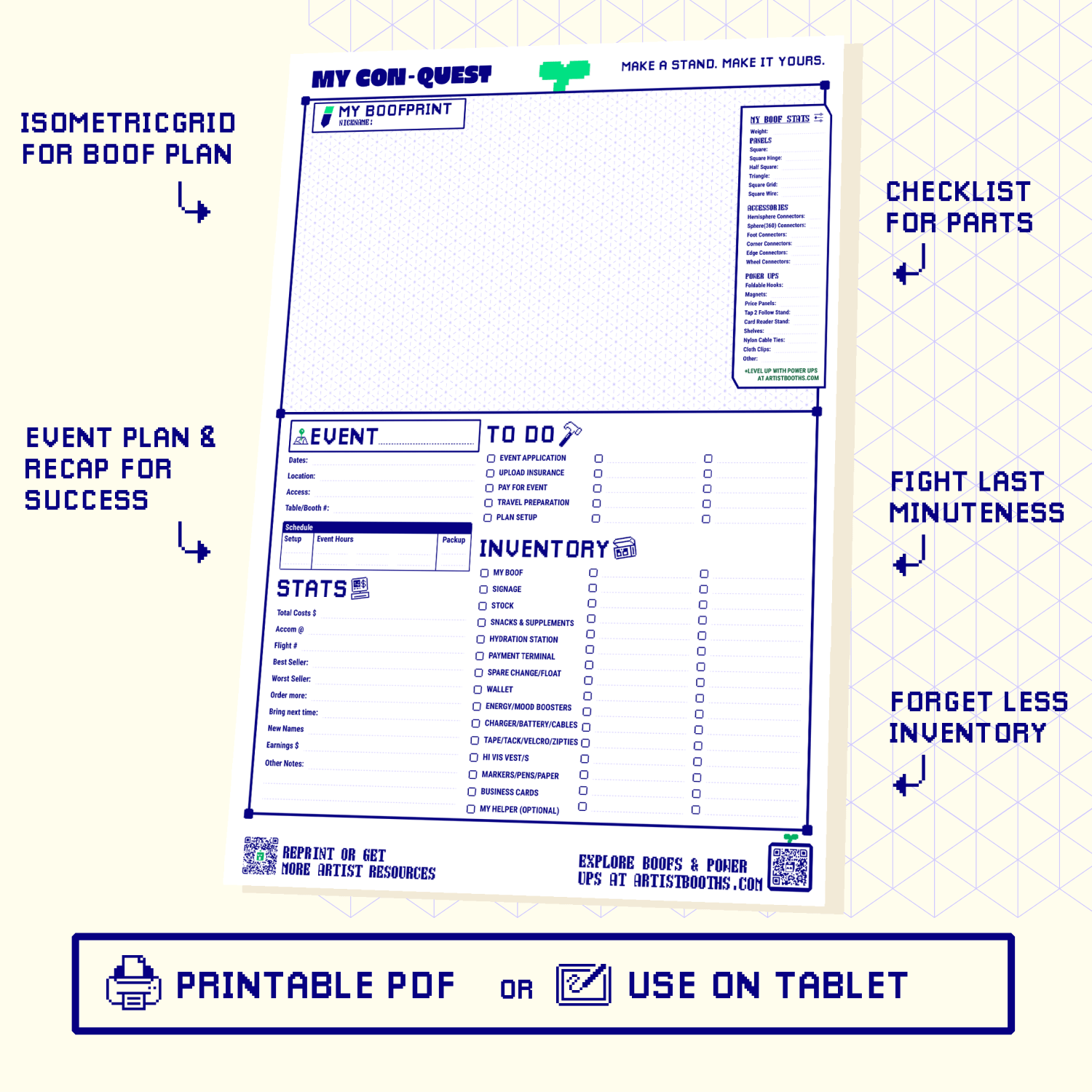
Con's in seven days and your booth is still a pile of prints in a closet. Relax, this is doable. Here's a realistic week-out plan that gets you show-ready without pulling an all-nighter on Thursday.Days 7-6: Inventory and print runCount what you actually have versus what you need. This is boring but it's the step that saves you from a Sunday scramble to reprint your best seller. Order your prints now, not Wednesday. Printers get slammed during con season and rush shipping isn't guaranteed.Days 5-4: Test your display, don't assume itIf your booth kit has sat in a bag since last con, set it up at home before show day. This is where a no-tool build actually pays off, you can test the full layout in your living room in under 30 minutes and catch problems while you still have time to fix them. Check every shelf holds weight properly (the 35x35cm frosted panels are rated to 5kg per shelf), make sure nothing wobbles, and confirm your table fits the space, most con tables are the standard 180cm/6ft.Days 3-2: Signage, pricing, and the boring adminPrint your price sheet. Charge your card reader. Print business cards if you're out. This is also when you should finalize your booth layout on paper, decide what goes at eye level (your best work), what goes in bins (prints people dig through), and what goes up top for visibility across the hall.Day 1: Pack smart, not fastPack in the order you'll unpack. Frame and panels first since they go down first, then shelves, then stock, then the small stuff on top. A kit that packs flat travels light between shows, which matters even more if this is a back-to-back weekend. Do a final gear check against a written list. Don't trust memory the night before a con.What if I don't have a week, just two or three days?Cut the print run first if you have to. A smaller but well-organized selection beats a chaotic pile you didn't have time to sort. Setup and signage still need their time regardless of how compressed the schedule gets.Should I bring backup panels or parts?If you've got room in the car, yes. A spare shelf or connector costs you nothing to bring and saves your whole show if something bends in transit.How do I know which kit size to bring?Match it to your table. Most cons hand out a standard 6ft table, and the modular artist booth display kit is built to fit that exactly, so measure your actual booth space, not just what looks good at home.Seven days is plenty of time if you don't waste the first three of them procrastinating. Browse the full kit range now if you're still deciding what to bring, not the night before load-in.

Indoor Con Halls vs Outdoor Markets: Two Different Display Games

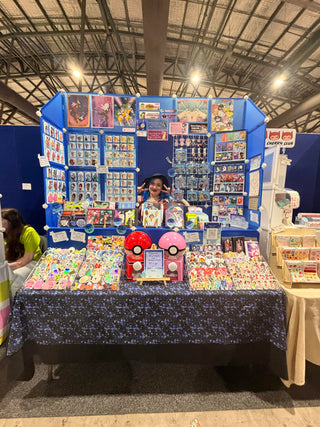
We'll say it plainly. Indoor con halls and outdoor markets are not the same job wearing different clothes. They're two different games, and vendors who treat them the same usually get burned once before they learn.Indoors, you're fighting for attention under fluorescent lights next to a hundred other booths screaming for the same eyeballs. Height and colour win that fight. You want panels stacked tall, art facing outward at eye level, and a setup that reads clearly from ten feet away in a crowd moving at con-hall speed. Nobody outdoors is competing with a wall of booths behind them, but indoors that wall is your whole battlefield.Outdoors it's a completely different fight. You're not competing with booth density, you're competing with the sky. Sun glare, gusts, the chance of rain rolling in an hour before close. A setup that looks incredible under con lighting can get wrecked by ten minutes of wind if it wasn't built with that in mind. Weight distribution and quick teardown matter more outdoors than colour theory ever will.One kit, two completely different setupsHere's the part people miss. You don't need two different display systems for these two worlds. You need ONE system that reconfigures. The modular artist booth display kit goes up in under 30 minutes with no tools either way, but how you build it should change with the venue. Indoors, build tall and dense. Outdoors, build low and weighted. Same panels, same frame, completely different instincts driving the layout.Vendors who do both circuits well aren't the ones with the fanciest booth. They're the ones who actually think about which game they're playing before they start unpacking. Check the full kit lineup and stop assuming your indoor setup will just work outside. It won't, not without rethinking it first.

Outdoor Market Displays: Wind, Weather And What Holds Up

Outdoor markets play by different rules than con halls. No walls, no climate control, no guaranteed shade. Here's what actually holds up when the wind picks up and the sky can't decide what it's doing. Weight low, not high. Wind grabs tall thin structures first. Keep your heaviest stock and shelf weight low on the panels, and don't stack your tallest pieces on the top row when gusts are forecast. A frame that's stable at 175cm tall indoors can still get pushed around outside if it's top-heavy. Clip your prints down, always. Even a light breeze will send loose prints sailing into the next vendor's table. Binder clips, magnets, or weighted print bins are non-negotiable outdoors. Treat every flat surface as something the wind is trying to steal from. Frosted panels shrug off glare. Direct sun on a glossy display washes everything out and makes your art unreadable from three feet away. The 35x35cm frosted panels diffuse light instead of bouncing it straight into a customer's eyes, which matters a lot more outdoors than under fluorescent con lighting. Pack light because you're doing this solo. Outdoor markets rarely have loading docks or elevators. You're carrying gear from a car across grass or gravel, often alone. A kit that packs flat and travels light isn't a luxury here, it's the difference between one trip and four. Modular means you can shrink fast. Weather turns. A gust warning goes out mid-market and suddenly you need to drop your display height and consolidate. This is where the modular artist booth display kit earns its keep, panels come down and reconfigure in minutes without tools, so you can lower your profile instead of packing up entirely. Rain means your setup needs a fast teardown. A surprise shower shouldn't mean panicked scrambling. No-tool assembly works both directions, up in under 30 minutes and down just as fast when you need to protect your art NOW. Test your setup before show day. Set it up in your backyard or driveway once before your first outdoor market of the season. You want to know exactly how it handles in real wind, not guess on the day with customers watching. Outdoor markets reward vendors who plan for weather instead of hoping it behaves. Browse the full range of modular kits and pick a size that matches the space you'll actually be working outdoors, not just the biggest one available.

Regional Small Cons vs Major Conventions: What Changes

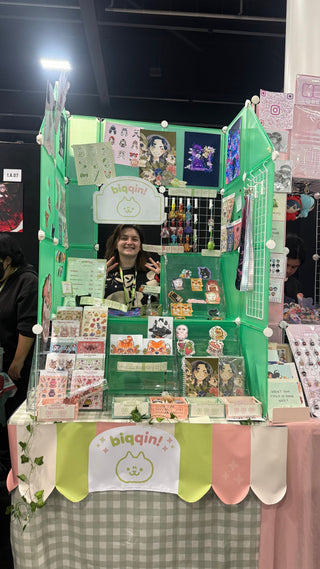
A folding table setup that kills it at your local library con can fall flat at a 40,000-person mega convention. And a rig built for a big show can feel like overkill at a small regional one. Booth strategy is not one-size-fits-all. Here is what actually changes between the two, and how to build a display that flexes with you.Foot traffic changes everythingSmall regional cons might see a few hundred to a couple thousand people over a weekend. People walk slow. They talk to you. They read your bins. At a major con, you're getting flash-glanced by thousands of people an hour, most of them mid-stride, overstimulated, and looking for a landmark to remember your table by. Your display needs to work as a billboard at big shows and as a conversation starter at small ones.Height and visibility rules are differentAt small cons you can often get away with a low-profile setup because aisles are wide and crowds are thin. At major cons, tall booths around you will swallow a flat table setup completely. This is where panel height matters. A modular artist booth display kit builds up to 5 panels high, roughly 175cm, tall enough to actually get seen over heads in a packed hall. At a small show you can run it lower and wider instead. Same kit, different configuration, zero extra gear bought.Setup time and turnaroundSmall cons usually give you a relaxed morning to set up. Major cons cram hundreds of artists into a tight load-in window, sometimes under an hour before doors open, and staff will hover if you're slow. This is where tool-free setup stops being a nice spec on a page and starts being the reason you're not sweating at 8:45am. A full modular kit goes up in under 30 minutes with no tools. That matters double when you're doing back-to-back shows and packing out Sunday night to drive to the next one Thursday.Which kit size actually fitsRegional shows often box you into a single 6ft table with barely any depth behind it. Core (24 panels) is built for exactly that footprint and keeps your setup tight without crowding your own workspace. Bigger shows sometimes hand out double-wide spaces or corner spots, where Shapeshift (70 panels) or Shapeshift Max (92 panels) actually get to stretch out and hold real shelf weight, up to 5kg per shelf on the 35x35cm frosted panels. Buy for the biggest show you regularly do, then scale down for the small ones. Going the other way doesn't work.Do I need a bigger display for a major con?Not necessarily bigger, but taller and denser usually helps. Height wins the visibility fight in a packed hall more than footprint does.Can one kit realistically cover both show types?Yes, that's the whole point of a modular system. You add or remove panels and shelves depending on the space you're handed instead of owning two separate setups.What changes fastest between regional and major cons?Load-in time. A relaxed regional morning versus a brutal major-con crunch is the single biggest planning difference, and it should shape how fast your setup routine actually is, not just how good it looks.Bottom line: build one flexible system and adjust it per show instead of building a new booth every time the venue changes.

First Con Of The Year: Getting Your Setup Con-Ready After Winter

Your booth has been sitting in a closet, a garage, or the back of a car since your last show months ago. Before you show up to your first con of the year, take an honest look at what actually survived the off-season.Inspect before you assume everything's fineMonths in storage means humidity swings, possible dust, and stuff getting shifted around or crushed under other gear. Don't just grab your bins and go. Lay everything out and check panel connections, shelf brackets, anything that could have warped or loosened while it sat unused. Better to catch a problem in your living room than in a loading dock.Your product lineup probably needs a refresh tooWhatever was your top seller last season might not be this season. Trends move fast, especially in fandom-driven spaces. Before your first show, actually look at what's current, what you're excited about now, and whether your old bestsellers still deserve prime shelf space or should move down to make room for new work.Re-learn your own setup, seriouslyIt sounds silly, but after months off, you WILL forget your own layout logic. Do a full practice build at home before your first con, not the morning of. This catches missing pieces, confirms everything still clicks together properly, and gets your muscle memory back before you're doing it for real in a loading zone with a line forming behind you.Check the calendar and plan your season, not just your first showFirst con of the year is a good moment to actually map out your circuit for the months ahead. Know your table sizes across different shows so you know if your current kit fits everywhere or if you need to size up. A build that fits a standard 180cm/6ft table travels well across most shows without reconfiguring every time.How do I know if my display survived storage okay?Do a full test build at home before your first show. If every panel clicks in cleanly and nothing feels loose, you're good to go.Should I refresh my product lineup for a new con season?Yes, worth a hard look. What sold last year isn't guaranteed to sell this year, especially in fast-moving fandom spaces.Is it worth upgrading my kit size for a new season?If you found yourself cramped last season, sizing up from Core to Shapeshift Base, or Shapeshift Base to the full Shapeshift, is a common move heading into a new circuit.Getting con-ready for a new season? Check out our modular display kit or see the full kit lineup to plan your setup before your first show.

Back To Back Con Season: Keeping Your Display Fresh Every Weekend

If you're running four cons in a row across peak season, your display is taking more punishment than your art is. Constant load-in, load-out, travel, repeat. Here's how to keep it looking sharp when you're the one running on fumes.Wear shows up fast when you're doing this weeklyA display that looks fine after one show can look beat up after five in a row. Scuffed corners, loosened joints, panels that don't sit quite as flush. Back to back con season is the real stress test for any booth setup, way more than a single big show ever is. This is where cheap materials fall apart, literally, and where a sturdier build actually pays for itself.Pack-down speed is what saves your sanity, not setup speedEveryone talks about how fast a display sets up, but on back to back weekends, breakdown speed matters just as much, because you're doing it exhausted at the end of a long day before driving to the next city. A system that packs flat and travels light means less time disassembling in a rush and more time actually resting between shows.Consistency across shows builds recognitionIf people follow you across a con circuit, a familiar booth layout actually works in your favor. Regular attendees start to recognize your setup from show to show, which builds a kind of brand memory that a totally different table each time doesn't. Keep your shelf layout roughly consistent even as your stock rotates.Build in maintenance checks between showsGive your panels and shelves a quick once-over between cons, even a 5 minute check. Catch a loose connection before it becomes a mid-show collapse. A modular system means you're checking connection points, not gluing anything back together, which is a much smaller job when you're running on four hours of sleep between venues.How do I keep my booth looking fresh across a long con circuit?Do a quick check between shows for loose panels or worn spots, and keep your layout consistent so returning customers recognize your table.Is a modular system actually more durable for frequent travel?Yes. Since it packs flat and reassembles from the same connection points every time, there's a lot less wear than displays that get glued, taped, or zip-tied fresh at every show.What's the biggest mistake vendors make during back to back con season?Skipping maintenance checks because they're exhausted. A five minute check between shows prevents most mid-show failures.Running a full con circuit this season? Check out our modular display kit or see the full kit lineup built to survive back to back weekends.

Winter Market Booths: Displays That Handle Cold And Crowds

Winter markets pack a specific kind of chaos: cold hands, bulky coats, indoor venues stuffed to capacity, and shoppers who are simultaneously freezing outside and sweating in five layers inside. Your booth has to work with all of that, not against it.Bulky winter coats change how people move through your spaceEveryone's wider in winter. Puffer jackets, bags, gloves, all of it makes shoppers bump tables more than they do in spring or summer. Loose items on flat surfaces get knocked around constantly. A shelved structure keeps product up and off the collision zone at coat-and-elbow height, which matters a lot more than people think until they've worked a packed winter market.Cold hands make fussy setups miserableIf your load-in is outdoors, even briefly, cold fingers do NOT want to deal with tiny screws or stiff grommets. Tool-free assembly that clicks together without fine motor work in freezing temps is the difference between a smooth setup and a frustrating one. Under 30 minutes matters even more when you're rushing to get inside and warm up.Indoor winter venues run hot and crowdedOnce you're inside, a lot of winter markets are the opposite problem: overheated, packed rooms with everyone's coats making the aisles narrower than they look on the floor plan. Keep your booth footprint tight and predictable. A vertical build that stays within its footprint instead of sprawling wide helps a lot when aisle space shrinks under crowd pressure.Product care in winter is its own thingCold-to-warm transitions can cause condensation on certain materials, and dry winter air is rough on paper stock, causing curling or static cling between prints. Keep backstock sealed until it's needed and let anything that traveled in a cold car acclimate a few minutes before unpacking it onto your shelves.How do I keep product from getting knocked around in a crowded winter market?Shelved, vertical storage keeps items above elbow and coat height, which is where most accidental bumps happen in a packed winter crowd.Does cold weather affect the display panels?The panel build holds up fine through cold load-ins. It's your paper stock and adhesives that need more care in winter, not the structure itself.What kit works best for tight indoor winter market footprints?The Shapeshift Base (46 panels) keeps a compact footprint while still giving real shelf space, useful when aisles get narrow with everyone bundled up.Getting your booth winter-ready? Check out our modular display kit or see the full kit lineup before the cold season kicks off.

Summer Con Season: Prepping Your Display For The Heat

Summer con season means outdoor load-ins, sweltering convention halls with the AC losing the battle, and product that behaves differently in the heat than it did in your climate-controlled studio. Here's what actually changes.Heat warps things you wouldn't expectPrints can curl. Stickers can get tacky and stick to each other in the bin. Certain adhesives soften. Before you even think about your booth structure, check how your actual product holds up in heat, ideally by leaving a sample in a hot car for an afternoon. If it survives that, it'll survive a warm hall.Your display material matters more in summer than any other seasonCheap MDF and particleboard displays can warp or swell in humidity and heat over a multi-day outdoor con. A sturdier panel build holds its shape through a hot, humid weekend in a way that budget wood risers just don't. This is one of those things you don't notice until day two, when everyone else's cheap shelving is sagging and yours isn't.Outdoor summer cons mean direct sun on your tableIf you're anywhere near a window or an open-air section of the venue, direct sun will hit part of your table at some point in the day. Rotate stock that's sensitive to fading or heat away from that side, and keep an eye on it through the day rather than setting it and forgetting it. A tall structured build also gives you the option to angle panels to block direct sun off your most vulnerable items.You're sweating through load-in, so fast setup matters doubleNobody wants to spend 45 minutes wrestling with a fussy display in a hot parking lot before a con even opens. No-tool assembly under 30 minutes gets you out of the heat and into the AC faster, and it packs flat and light enough that you're not hauling a heavy crate across a scorching lot either.Will heat damage the display panels themselves?The frosted panel build is designed to hold its shape through multi-day shows, including warm, humid conditions that warp cheaper wood setups.How do I protect prints from heat during a summer con?Keep stock out of direct sun where possible, store overflow prints flat in a bag rather than a hot car, and check curling on your top sellers throughout the day.Is a lighter kit better for summer cons with more load-in walking?If you're hauling gear a long distance in the heat, the Core kit (24 panels) or Shapeshift Base (46 panels) keep your load lighter without sacrificing a real structured booth.Getting ready for a hot summer con run? Check out our modular display kit or see the full kit lineup to plan your setup.

Farmers Market Vendor Setups For Non-Food Sellers

Farmers markets are built around produce stands and food carts, and if you're selling art, jewelry, or prints in that mix, you're already fighting an uphill battle for attention. The crowd came for tomatoes, not necessarily for you. Here's how to actually get noticed.You need to look different from the produce stands around youMost farmers market booths are folding tables with a cloth and a sign. That's fine for vegetables, it's forgettable for art. If your setup looks identical to the honey stand next to you, shoppers scan right past it. A structured, shelved display with real height immediately signals "this is a different kind of booth" and pulls the eye of people who weren't specifically looking for what you sell. That contrast is your biggest advantage in a food-dominated market.Farmers market crowds are browsing slower, use thatUnlike a con crowd blitzing past a hundred tables, farmers market shoppers wander. They're relaxed, they've got a coffee, they're not in a rush. That means you actually get real browsing time, so use your shelf space to tell a story instead of just maximizing volume. Group pieces by color or theme, leave breathing room, let people actually look instead of scan.Outdoor weather is the real variable hereFarmers markets are almost always outdoors, rain or shine, wind included. A flimsy tablecloth-and-bin setup gets knocked around by wind gusts fast. A structured panel build with real weight and stability holds up a lot better in an open-air pitch than loose displays that catch wind like a sail.You're probably doing this weekly, so setup speed compoundsFarmers markets often run every week, sometimes year round. A setup that takes 45 minutes to build might be fine once, but multiply that by 40 weekends a year and it's a real cost. Sub-30-minute, no-tool setup adds up to hours of your life back over a season, and it packs flat enough to keep in the car between markets instead of a full re-pack every time.Do art vendors actually do well at farmers markets?Yes, especially when the booth visually stands apart from the food stalls. Standing out from the produce tables is most of the battle.How do I protect my display from wind at an outdoor market?A structured, weighted build handles wind far better than loose tablecloths and lightweight bins that catch air like a sail.What kit size makes sense for a weekly farmers market?The Shapeshift Base (46 panels) is a solid middle ground, enough shelving for a real catalog without being a hassle to load in and out every single week.Bringing your art to a farmers market crowd? Check out our modular display kit or see the full kit lineup to find your fit.

Night Market Displays: What Changes After Dark

Night markets look magical from the outside and are a genuine headache to set up for if nobody warns you first. Lighting, visibility, and how your work actually reads under string lights or a single overhead bulb, none of that is the same game as a daytime show.Your art needs to compete with bad lighting, not good lightingDaytime shows give you natural light for free. Night markets give you whatever the venue decided to string up, and it's usually warm, dim, and uneven. Prints that look vibrant at noon can look muddy under orange string lights. Test your actual pieces under warm, low light before the show, not just in your studio with daylight bulbs. Some artists keep a small clip light or two aimed at their top shelf specifically because ambient market lighting alone isn't enough.Visibility from a distance matters more at nightNight markets are often more spread out, sometimes across a park or a closed street, and people are navigating by whatever's lit up and eye-catching from twenty feet away in the dark. A tall, structured booth silhouette reads as a destination in a way a flat table just doesn't. Building up to full height, 175cm on a standard 6ft table, gives you a shape people can spot and walk toward even in low light, instead of blending into a row of dark tables.Cords, lights, and gear need somewhere that isn't the table surfaceIf you're running your own lighting, that's extra gear competing for table space with your actual product. A shelf structure gives you a place to tuck a small light or a phone charger out of the way without it eating into your display area or becoming a tripping hazard for shoppers browsing in the dark.Pack-up in the dark needs to be simpleBreaking down a booth after 9pm with a flashlight in one hand is not the time for a complicated system. No-tool assembly that you can basically do by feel matters a lot more once the sun's down and you're tired. Packing flat and light also makes the walk back to your car in a dark lot a lot less painful.Do I need special lighting for a night market booth?Not required, but a small clip light on your top shelf helps your best pieces actually read true to color under warm ambient lighting.How do I make my booth visible from far away at a night market?Height and a distinct silhouette do more work than color alone in low light. A tall, structured setup is easier to spot from across a dark venue.Is breakdown harder at night markets?It can be if your setup is fussy. Tool-free assembly that you can manage quickly in low light makes a real difference at 10pm.Setting up for your first night market? Check out our modular display kit or see the full kit lineup to find a build that stands tall after dark.

Holiday Market Booths: Handling The Busiest Weekend Of The Year

Holiday markets are chaos in the best possible way. Everyone's shopping for gifts, everyone's in a hurry, and the crowd density can be double what you see at a normal weekend market. Your booth needs to handle volume, not just look nice.Gift shoppers move faster and buy more, so restock access mattersHoliday market buyers aren't browsing for fun, they're checking names off a list. That means faster decisions and higher volume per person compared to a regular market. You will sell out of your popular items mid-day if you're not careful, so your setup needs easy access to backstock, not everything crammed onto the visible shelf with nothing in reserve. Build your display so restocking a shelf takes seconds, not a full table teardown.Gift-ready presentation beats everything elsePeople are buying FOR someone else, which changes what sells. Small, clearly priced, easy to grab items move fast during holiday season, more than big statement pieces that need a longer sales conversation. Group your gift-under-$30 items together and make them obvious. A clean shelf grid does this automatically, way better than a table covered edge to edge.Cold weather markets need a display that isn't fighting you tooA lot of holiday markets run outdoors or in unheated venues. Cold hands, bulky gloves, everyone in a hurry. You don't want to be wrestling with a stiff, finicky setup on top of that. No-tool assembly matters here more than usual, you're often setting up in the cold before doors open and you want it done fast so you can warm your hands back up. Setup lands under 30 minutes even in a rushed, cold morning load-in.Weekend-long shows need a structure that survives the crowdHoliday markets often run multiple back to back days over a single weekend, sometimes with thousands of shoppers moving through. Bags swing, kids grab, the crush is real. The 35x35cm frosted panels hold up to 5kg per shelf so your product actually stays put through a weekend of high traffic instead of getting knocked to the floor.How do I avoid selling out too early at a holiday market?Keep backstock accessible behind or below your main shelves and restock in small batches through the day instead of loading everything out at once.What price point sells best at holiday markets?Small gift-ready items in an obvious, grouped display tend to outsell single big-ticket pieces, since most shoppers are buying for other people on a list.Is a bigger booth worth it for holiday market volume?If you're running a full catalog for gift season, the Shapeshift Max (92 panels) gives you enough shelving to handle the volume without constant restocking runs.Getting ready for the holiday rush? Check out our modular display kit or see the full kit lineup before the season gets busy.

Zine Fest Setups: Small Space, Big Personality

Zine fests are a different animal. Half tables, shared tables, sometimes a literal card table wedged in a corner. You don't get much room, and you don't need much. What you need is a setup that makes a tiny footprint feel intentional instead of cramped.Small space means every inch has to earn its spotAt a full con you can spread out and let things breathe. At a zine fest you're often working a half table, sometimes sharing the surface with another vendor entirely. Flat displays eat your only real estate fast. Going vertical is the actual fix here. A compact build gives you shelf space stacked above the table instead of spread across it, so your zines, stickers, and mini prints all get a visible spot without needing extra width. The Core kit (24 panels) is built exactly for this, a tight footprint that still gives you real shelving instead of a flat pile.Personality sells at zine fests more than polish doesZine fest buyers aren't looking for a slick corporate booth. They're looking for a person behind a table who clearly made the thing they're holding. That said, personal doesn't mean messy. A clean little structure with your zines faced out and organized by series or theme reads as intentional. A pile of stapled paper on a bare table reads as an afterthought, even if the work inside is great.You're probably tabling solo, so setup speed actually mattersNo assistant, no partner, just you and your bag of zines. Setup that needs tools or takes forty minutes to wrangle eats into time you could be talking to people. This sets up in under 30 minutes with no tools, which matters even more at a half-table show where you might be doing it solo between panels and bathroom breaks.Zine fests travel light, your booth should tooA lot of zine fest vendors are hopping between multiple small shows in the same month, sometimes carrying everything on transit. A setup that packs flat and travels light is the actual dealbreaker feature here, not how tall it goes. You want something that fits in a bag, not something that needs a car trunk.Do I need a full kit for a half table zine fest?No. The Core kit (24 panels) is sized for exactly this. Bigger kits are overkill on a half table and just eat space you don't have.How do I make a tiny table look organized, not empty?Group by series or theme, face covers outward, and use vertical shelving instead of flat stacks. Empty space between groups reads as clean, not sparse.What's the biggest space mistake zine fest vendors make?Laying everything flat. It buries your best work under everything else and makes the whole table look cluttered even when it isn't.Tabling a zine fest soon? Check out our modular display kit or see the full kit lineup to find a size that actually fits a half table.

Comic Con Displays: Standing Out At The Biggest Shows Of The Year

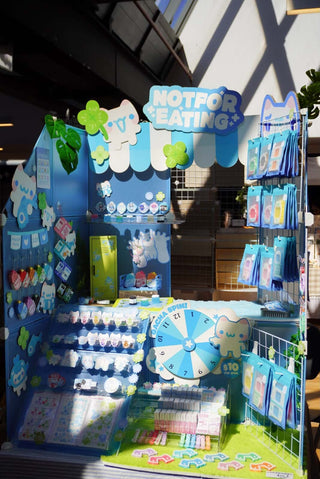
Comic con is the show. Bigger budget, bigger crowds, bigger expectations from buyers who've walked a hundred artist alley aisles already this year. You're not just competing with the table next to you, you're competing with every con they've ever been to.You need a signature look, not a generic tableAt a show this size, forgettable is fatal. People remember a handful of booths out of hundreds and yours needs to be one of them. That means committing to a real structure, not a folding table with prints leaned against a bin. A built display with clean shelf lines and consistent height gives your whole table a signature silhouette people recognize walking down the aisle, even from a distance. The Shapeshift kit (70 panels) is the most popular pick for comic con exactly because it scales to a full 6ft table without looking sparse or overbuilt.Big shows mean big variety, so plan your shelf hierarchyComic con buyers want everything: prints, books, pins, commissions, maybe apparel. Cramming it all onto one flat surface makes your table look like a garage sale. Build your shelf hierarchy on purpose. Eye level gets your best sellers and anything you want people to stop for. Top gets your biggest, boldest pieces that pull attention from ten feet away. Bottom gets bins, overflow stock, and bags. If you're running a bigger catalog, the Shapeshift Max (92 panels) gives serious builders enough real estate to actually organize instead of stack.Multi-day shows punish bad setupsComic cons often run 3 to 4 days. Anything flimsy WILL fail by day two. Cheap grommet panels sag, zip ties snap, cardboard risers get crushed under product weight. A setup that packs flat and travels light between hotel and hall matters just as much as how it looks on day one, because you're breaking it down and rebuilding it daily.Don't skip the space planning before you arriveComic con floor plans are tight and aisles get jammed fast. Know your table dimensions ahead of time. Everything here is built to fit a standard 180cm/6ft table, so you're not improvising with tape and guesswork the morning of.How much should I budget for a comic con booth build?Start with what fits your table size and your catalog volume, not the biggest kit available. A well matched mid-size build outsells an oversized one that looks empty.Should I bring backup panels for a multi-day show?It's smart if you're running a huge catalog, but the core structure should hold up across the full weekend without needing repairs.What's the biggest mistake first-time comic con vendors make?Underestimating how much the booth itself matters. At this size of show, the display is doing half your marketing before a single conversation happens.Ready to build a booth that actually holds up across a full comic con weekend? Check out our modular display kit or see the full kit lineup to compare sizes.

Anime Convention Booths: What Actually Sells At Anime Expos

Anime expo crowds move different. They're fast, they're photo-obsessed, and they know exactly what character they're hunting for before they even walk in the door. If your booth makes them slow down and squint to figure out what you sell, you already lost them.The crowd is scanning, not browsingAnime con foot traffic is BRUTAL in the best way. Thousands of people moving past your table in waves, most of them locked onto a specific artist alley list on their phone. You get maybe two seconds of eye contact with your table before they decide to stop or keep walking. That means your top row needs to be your loudest, most recognizable fandom pieces. Save the niche stuff for lower shelves where people actually stop and dig.Vertical space wins at anime consAnime artists tend to sell a huge spread of prints, charms, stickers, and acrylic stands, and all of that needs somewhere to live that isn't a flat table getting buried under everyone else's stuff too. This is where going tall actually pays off. Our modular display kit builds up to 5 panels high, about 175cm, which gives you real wall space above the table instead of fighting for table real estate with your neighbor. The Shapeshift kit (70 panels) is the one most anime artists land on because it's got enough panels for prints up top, charm pegs mid-level, and a clean shelf line for stands and figures at eye level.Setup speed matters more here than anywhere elseAnime cons run brutal early load-in windows and even worse breakdown crunches on the last day. You do NOT want to be the artist still fumbling with grommets and zip ties while everyone else is already open for business. The panels click together without tools, and most people are fully set up in under 30 minutes. That's the difference between catching the opening rush or missing it entirely.Durability for a weekend of chaosAnime con crowds bump tables. A lot. Bags swing, kids run, cosplay wings knock into displays. The 35x35cm frosted panels hold up to 5kg per shelf, so your charm racks and acrylic stands actually stay put instead of sliding off every time someone brushes past.Do I need a huge booth to compete at an anime expo?No. A well organized Core kit (24 panels) on a single table beats a messy oversized setup every time. Anime con buyers respond to clarity, not size.What sells best at anime expos specifically?Charms, stickers, and acrylic stands move fast because they're cheap impulse buys. Prints sell to people who already know your art. Both need dedicated, visible space, not a shared pile.How do I handle the crowd crush without losing product?Keep small, grabbable items on secured shelves, not loose on the table edge. Vertical panel space keeps things out of the bump zone.If you're building out a setup for your next anime con, check out our modular display kit or see the full kit lineup to find the size that matches your table count.
60-second quizExtra 5% off

Find your ideal display kit size in 60 seconds & score extra 5% off

What are your planned setups going to be?
Half table (90cm / 3ft)
Sharing a table or just starting out
Full table (180cm / 6ft)
The standard table at most cons, markets & fairs
Double, corner or booth (360cm / 12ft)
Two tables, an L-shape, or a full corner stand
Free-standing booth (no table)
A floor-standing wall, no table needed
Select all that apply
How long do you plan to use it?
Just trying it out
1–3 times
Going to do markets more often
3–20 times/year
Multi-year use
Built to last, with room to grow
What do you display?
Small prints, cards, pins & stickers
Flat, lightweight, easy to pin
Large prints & posters
A2 and up, needs room to breathe
Large items : Apparel/bags/figures/3d merch/home goods
Heavier, bulkier pieces that need sturdy shelf framing
Jewellery, charms & keychains
Small and light, lots of little hooks
Select all that apply
How tall do you want it?
Keep it low so my table and wall stay visible
A clean, low backdrop that frames your work
Build tall framing for maximum impact
A towering wall that pulls eyes from across the hall
Which colours catch your eye?
Amber Yellow
Apricot
Avocado Green
Blue Sky
Forest Green
Fully Black
Grape Purple
Ivory White
Jade Green
Lavender Purple
Lilac Purple
Mint Green
Royal Blue
Scarlet Red
Snow White
Tan Brown
Terracotta
Watermelon Pink
Yuzu Yellow
Select all that apply
Your perfect kit and an extra 5% off are ready, pop in your email below to reveal both.
Unlock your kit & bonus 5% discount
Pop in your email and we'll reveal your extra 5% off, auto-applied at your cart.
Your result
Your perfect match
Your stall. Infinite installs.

Lightweight panels and snap on connectors shapeshift together.

Iron frame with frosted, water resistant surfaces for light & mighty structures.
Shapeshift kit part
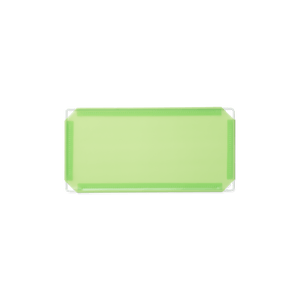
Artistbooths Bundle Component Frosted Lavender Purple (PMS 2715 C) Panel Square (35x35 cm) [8-pack]
Shapeshift kit part
B-grade artist booth panel - discounted cosmetic-second stock
Shapeshift kit part
Shapeshift kit part
Artistbooths Bundle Component Frosted Lilac Purple (PMS 263 C) BOOF Panel Triangle (35x35 cm) [2-pack]
Shapeshift kit part
Shapeshift kit part
Shapeshift kit part
Shapeshift kit part
Shapeshift kit part
Artistbooths Bundle Component Frosted Lilac Purple (PMS 263 C) BOOF Panel Half Square (35x17.5 cm) [4-pack]
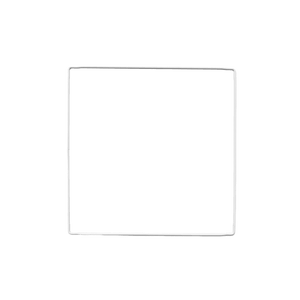
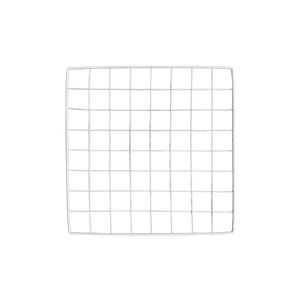
Artistbooths Single Connectors & Accessories White Square Wire Grid (35x35 cm)
Shapeshift kit part
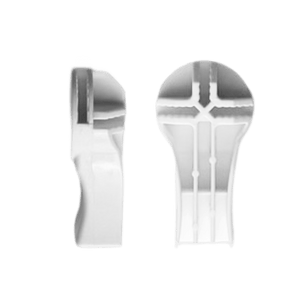
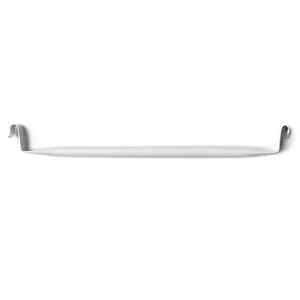
Artistbooths Single Connectors & Accessories White Edge Connector

Stand out pop ups.Shapeshifting setups.

Custom shapes and mix-and-match colours, built to sell for years.

Shop
Scroll

build a booth that builds a crowd

Little parts. Big payoff.

Why makers love our booths.

Every detail pulls its weight.

Stand out, sell out.

Be the eye-catching brand whose cohesive look draws a crowd and gets remembered.

Grow with you.

Enough parts to range products from small table to large booth.

Shape your brand.

Triangles, rectangles, hinge panels and connectors, in colours you mix yourself, for infinite display setups.

Be memorable.

Seasonal colours keep your brand unique. Frosted finish gives your art a soft spotlight.

Range & sell more.

Self-serve more customers with parts that make the most of smaller spaces.

Strong where it counts.

An iron core holds heavy stock whilst water-resistant surfaces shrug off spills and weather.

Packs light, carries safe.

Panels weigh 150g each. The double-wall carry box protects up to 30 decorated panels every trip.

Spares for years.

Every kit packs extra parts, so when you scale up or lose a piece you can keep running your vision.

Your products centre stage

Light diffusing panels.

Anti glare & bright product display

Build your modular display kit

Mix and match colours and shapes. Sized for market, convention and trade-show tables up to 6 ft / 180cm.

1. Choose kit size
2. Choose your kit colours
Only available
2aChoose your base 24 square & 22 multi-shape panel colours What colour would you like the first half of multi-shape panel colours to be?
Get a 2-colour setup by swapping 24 of 48 square panels to another colour.
Get a 2-colour setup by swapping half your panels to another colour.
2bWhat colour do you want the other 24 squares to be in this kit? What colour do you want the other half of your kit to be? Included · $0
Get a multi-colour setup by swapping 24 of 48 square panels in another colour.
Get a 2-colour setup by swapping half of square & multishape panels into another colour
3. Bundle and Save (optional)

Range more & get creative with more colours, shapes & display accessories.

15% off accessory packs when bundled with kits
Shapeshift Base Kit
46 multi-shape panels156 accessories

Shapeshift Base Kit Add-on

$559.20

Grape Purple Frosted

Square Panel [24 Pack] (35cm / 13.8in) Add-on

Square Panel [24 Pack] (35cm / 13.8in) Add-on

$450.00

Scarlet Red Frosted

Triangles Panels 4 Pack [35cm / 13.78in] Add-on

Triangles Panels 4 Pack [35cm / 13.78in] Add-on

$100.00

Terracotta Frosted

Half-Squares panels [5 Pack] [17.5x35cm / 6.89x13.78in] Add-on

Half-Squares panels [5 Pack] [17.5x35cm / 6.89x13.78in] Add-on

$100.00

Tan Brown Frosted

Self Serve Hook with wire grid T clip  8cm [10 pack] Add-on

Self Serve Hook with wire grid T clip 8cm [10 pack] Add-on

$40.00

Self serve display Grid & Intersection Hook expansion pack [12/24 Mixed pack] Add-on

Self serve display Grid & Intersection Hook expansion pack [12/24 Mixed pack] Add-on

$100.00

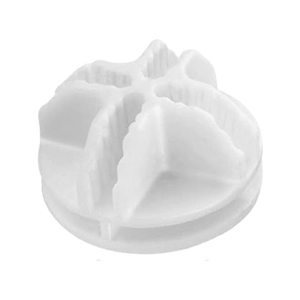
Multi Connector Expansion Pack - White - Bundle & Save [16/32 mixed pack] Add-on

Multi Connector Expansion Pack - White - Bundle & Save [16/32 mixed pack] Add-on

$120.00

Square Wire Grid Expansion Pack - 35cm x 35cm/13.7"x13.7" Add-on

Square Wire Grid Expansion Pack - 35cm x 35cm/13.7"x13.7" Add-on

$60.00

Hinged Square panels [5 Pack] [35cm / 13.78in] Add-on

Hinged Square panels [5 Pack] [35cm / 13.78in] Add-on

$100.00

Forest Green Frosted

Mini Rectangle Panels [5-Pack] (17cm x 35cm/6.69in x 13.78in) Add-on

Mini Rectangle Panels [5-Pack] (17cm x 35cm/6.69in x 13.78in) Add-on

$100.00

Amber Yellow Frosted

Foot Connector Expansion Pack [4 Pcs] Add-on

Foot Connector Expansion Pack [4 Pcs] Add-on

$59.00

Mixed Single & Double Wire Shelf Clip [9 pack] Add-on

Mixed Single & Double Wire Shelf Clip [9 pack] Add-on

$45.00

Booth Wheel & Wheel Connector - white - [4 pack] Add-on

Booth Wheel & Wheel Connector - white - [4 pack] Add-on

$60.00

Corner Connector Expansion Pack [8 pack] Add-on

Corner Connector Expansion Pack [8 pack] Add-on

$60.00

Edge Connector [8 pack] Add-on

Edge Connector [8 pack] Add-on

$60.00

Single Shelf Wire Clip White [5 pack] Add-on

Single Shelf Wire Clip White [5 pack] Add-on

$35.00

Double shelf wire clip white [4 pack] Add-on

Double shelf wire clip white [4 pack] Add-on

$30.00

Self serve display Grid & Fold Hook expansion pack [12/24 Mixed pack] Add-on

Self serve display Grid & Fold Hook expansion pack [12/24 Mixed pack] Add-on

$110.00

Foldable Self Serve Hook (with wire clip) - [20 pack] Add-on

Foldable Self Serve Hook (with wire clip) - [20 pack] Add-on

$80.00

White

Foldable Self Serve Hooks (with adhesive sheet) [20 pack] Add-on

Foldable Self Serve Hooks (with adhesive sheet) [20 pack] Add-on

$50.00

White

Metal mallet (with dual rubber/soft tap sides) [1 pc] Add-on

Metal mallet (with dual rubber/soft tap sides) [1 pc] Add-on

$40.00

Panel Clamp Black 3cm Mouth [4 pcs] Add-on

Panel Clamp Black 3cm Mouth [4 pcs] Add-on

$40.00

17" ITA Tote (40x35cm) Puffy Purple + Pin pad with 5 pockets Add-On

17" ITA Tote (40x35cm) Puffy Purple + Pin pad with 5 pockets Add-On

$129.00

Foldable Croc Hooks (adhesive) - 10-pack

Foldable Croc Hooks (adhesive) - 10-pack

$50.00

Black

Dual headed metal mallet (with soft tap side)

Dual headed metal mallet (with soft tap side)

$40.00

Your bundle
Free express shipping deal
Orders over $300 AUD
dhm
Free Exp. Shipping (2-7 bus.days) d h m
Your selection
American Express Apple Pay BancontactGoogle Pay Mastercard Shop Pay Union PayVisa JCBDiscoverDiners ClubMaestro
🌐 We ship globally express tracked⭐ 4.9🇦🇺 Designed in Aus
Build your own
Duo color display
Colorful display

Modular cube panels that snap together in minutes. Pick a color to start with and build & grow. for years.

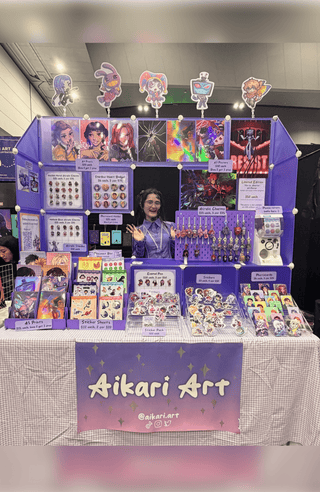
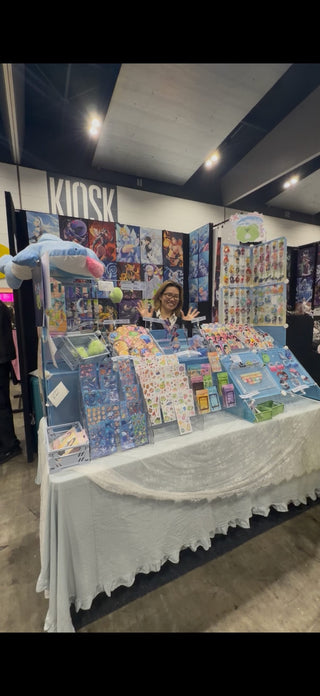
Modular artist display booth at a craft market
Indoor pet playpen enclosure